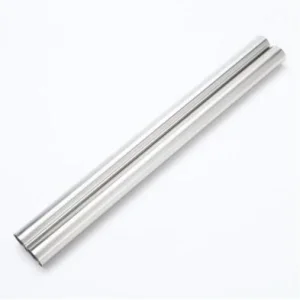
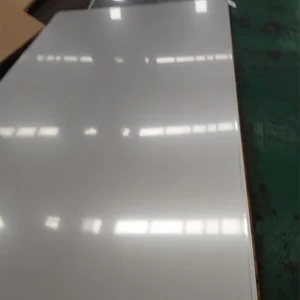
Mill-Direct Stainless Steel Pipe & Material Portfolio
Standard and customized stainless steel rectangular tubes, decorative pipes, industrial welded lines, and cold-rolled plates produced under ISO 9001 quality management.
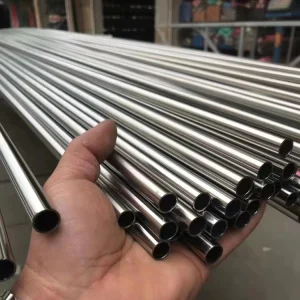

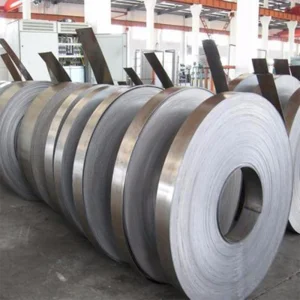


Technical Dynamics of Stainless Steel Rectangular Pipe Manufacturing
An in-depth analysis of cold-roll forming, high-frequency plasma/TIG welding integrity, corner-radius (R-angle) control, and metallurgical grade selection for industrial procurement managers.
Direct-to-Square vs. Round-to-Square Roll Forming
Modern Chinese manufacturing facilities utilize two primary roll-forming methodologies: Continuous Direct Square Forming and Round-to-Square Cold Shaping. Direct-to-square technology reduces wall thinning at the corners by up to 14% compared to traditional conversion methods, preserving maximum structural moment of inertia and yield strength across all four flat planes.
Welding Integrity & Online Seam Annealing
High-end structural rectangular tubing utilizes automatic TIG (Tungsten Inert Gas) or combined Laser-Plasma seam welding under argon shielding gas. For heavy-wall load-bearing applications, online induction weld seam annealing at 1050°C dissolves precipitated chromium carbides back into solid solution, eliminating intergranular corrosion risks along the longitudinal weld line.
Precision Corner Radius (R-Angle) Tolerances
R-angle design defines both visual appeal and mechanical joint fit-up. Standard commercial tubing maintains an R-angle of 1.5t to 2.0t (where t is wall thickness). Specialized Chinese factories now supply tight-radius rectangular pipes with R-angles as sharp as 1.0t to 1.2t, engineered specifically for high-end architectural facade frameworks and flush glass structural mountings.
Information Gain Engineering Note: Selecting between ASTM A554 (Structural/Ornamental Tubing) and EN 10296-2 / ASTM A312 (Modified Fluid/Pressure Profiles) requires evaluating yield strength versus ductility. While ASTM A554 allows higher hard-drawn mechanical strength for framing, pressure-rated rectangular sections require full-body solution annealing to satisfy ASME Code pressure boundary requirements.
Why Global Procurement Hubs Source Rectangular Tubing from Wuxi, China
China accounts for over 55% of global stainless steel production. Within Jiangsu province, the Wuxi industrial cluster provides an unparalleled ecosystem of raw material feedstock, precision processing machinery, and deep seaport logistics.
Traceable Upstream Mill Feedstock
Leading Chinese rectangular pipe factories source prime stainless steel mother coils directly from premier steel mills including Tsingshan Holding Group, TISCO (Taiyuan Iron & Steel), POSCO China, and Baosteel. This guarantees verified chemical heat numbers, consistent nickel/chromium content, and low impurity trace elements (sulfur < 0.005%).
Integrated Secondary Surface Processing
Wuxi factories feature comprehensive in-house finishing lines. Rather than outsourcing surface preparation, manufacturers operate multi-head belt grinders capable of executing Satin Finish, 180-Grit Hairline, 320-Grit Mechanical Polish, 8K Super Mirror, PVD Vacuum Color Coating (Titanium Gold, Rose Gold, Black Ti), and Anti-Fingerprint (AFP) nano-coatings on hollow rectangular profiles.
Export Packaging & Ocean Logistics
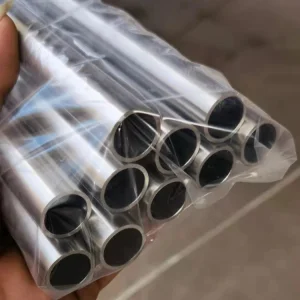
To eliminate surface scratching, water staining, and structural deformation during transoceanic shipping, Chinese manufacturers implement rigorous packaging protocols: individual PE sleeve protection, heavy woven plastic outer wrapping, solid wooden case framing, and ISPM-15 compliant fumigated palletization for container loading via Shanghai or Ningbo ports.
Stainless Steel Rectangular Pipe Technical Specification Matrix
Comparative reference data for engineering design, grade selection, structural loading calculations, and international standard compliance.
| Grade Category | UNS / EN Standard | Nominal Chemistry | Tensile / Yield (MPa) | Corrosion Resistance | Primary Industry Application |
|---|---|---|---|---|---|
| Grade 201 (Cr-Mn-Ni) | UNS S20100 / 1.4372 | 16-18% Cr, 3.5-5.5% Ni, 5.5-7.5% Mn | ≥ 515 / ≥ 260 | Moderate Indoor | Furniture framing, decorative handrails, display racks, interior architectural trim. |
| Grade 304 (Standard Austenitic) | UNS S30400 / 1.4301 | 18-20% Cr, 8-10.5% Ni | ≥ 515 / ≥ 205 | High General | Food processing frames, architectural facades, municipal infrastructure, general machinery. |
| Grade 304L (Low Carbon) | UNS S30403 / 1.4307 | 18-20% Cr, 8-12% Ni (C ≤ 0.03%) | ≥ 485 / ≥ 170 | Superior Welded | Heavy welded structures, chemical tanks, equipment frames requiring post-weld integrity. |
| Grade 316L (Marine/Moly-Bearing) | UNS S31603 / 1.4404 | 16-18% Cr, 10-14% Ni, 2-3% Mo | ≥ 485 / ≥ 170 | Chloride / Marine | Offshore platforms, coastal curtain walls, pharmaceutical cleanroom equipment, marine railing. |
| Grade 310S (High-Temp) | UNS S31008 / 1.4845 | 24-26% Cr, 19-22% Ni | ≥ 515 / ≥ 205 | High Heat (1150°C) | Furnace structural supports, heat exchanger frames, thermal treatment plant components. |
| Duplex 2205 (Austenitic-Ferritic) | UNS S31803 / 1.4462 | 22% Cr, 5% Ni, 3% Mo, 0.18% N | ≥ 620 / ≥ 450 | Ultra-High Strength | Desalination plants, chemical transport framing, heavy structural civil engineering load members. |
Theoretical Weight Calculation Formula for Stainless Steel Rectangular Pipes:
Weight (kg/m) = [2 × (Height + Width) / 3.1416 - Thickness] × Thickness × Density Factor
Note: Use density factor 0.02491 for 304/304L/310S, 0.02507 for 316L, and 0.02470 for Duplex 2205.
Global Macro-Industry Solutions & Application Scenarios
Tailored stainless steel rectangular profile engineering for high-stress structural, hygienic, and severe environmental installations across key global markets.
Architectural Facades & Curtain Walls
Modern skyscraper designs require slim profile mullions with high torsional stiffness. Stainless steel rectangular pipes (304/316L) offer a yield strength double that of traditional structural aluminum, allowing architecturally ambitious glass-curtain facades with thinner sightlines and superior wind-load resistance in typhoon-prone coastal zones.
Commercial Transportation & Rail Superstructures
Weight reduction without compromising crash safety is critical for electric bus chassis, high-speed rail frames, and refrigerated transport trailers. High-strength austenitic (304/316) and Duplex (2205) rectangular tubes provide maximum energy absorption during impact, high fatigue endurance, and maintenance-free longevity.
Food, Beverage & Cleanroom Equipment
Hygienic processing environments demand structural framing that eliminates bacterial harborage points. Smoothly ground weld seams on 2B or Ra < 0.4µm polished rectangular tubing prevent product buildup, withstand harsh CIP (Clean-In-Place) caustic washing cycles, and comply with international food safety standards.
Standard Operating Procedure for Global Rectangular Tube Procurement
How premier Chinese manufacturers ensure zero-defect delivery through rigorous Non-Destructive Testing (NDT), chemical verification, and compliance documentation.
1. Material Test Report (MTR) Verification
Every shipment is accompanied by an EN 10204 3.1 Mill Test Certificate directly traceable to original melt heats. Inspection covers chemical spectral analysis (XRF / OES), tensile strength, yield point, percentage elongation, and Rockwell/Vickers hardness testing.
2. Automated Eddy Current & Hydrostatic Inspection
In-line Eddy Current Testing (ECT) continuously scans 100% of the longitudinal weld line during roll forming to detect micro-cracks, pinholes, or incomplete fusion. Structural pressure-rated profiles undergo hydro-testing up to 20 MPa to guarantee boundary tightness.
3. Dimensional & Squareness Tolerances
Quality control technicians utilize digital laser micrometers and precision optical angle gauges to verify squareness of sides (within ±0.5°), edge twist (< 1.5mm per meter), wall thickness uniformity, and overall straightness prior to final bundling.
Technical Procurement FAQ: Stainless Steel Rectangular Pipes
Direct answers from engineering and global trade specialists to clarify key manufacturing, compliance, and ordering parameters.
What is the main advantage of stainless steel rectangular pipes over square or round tubing?
Rectangular profiles provide asymmetrical moment of inertia ($I_x \neq I_y$). This allows structural engineers to optimize bending strength along the principal load axis while conserving material weight compared to symmetrical square tubing or round pipes of equivalent cross-sectional area. They are ideal for curtain wall mullions, vehicle chassis, and cantilevered beams.
How do Chinese factories control corner radius (R-angle) during high-speed production?
Precision factories use multi-pass sizing stands with micro-adjustable side rollers. By accurately calibrating the strip width prior to welding and regulating cold-working pressure in the final sizing passes, factories achieve specified corner radii ranging from standard ($1.5t-2.0t$) down to sharp-cornered architectural profiles ($1.0t-1.2t$).
Should I specify 304 or 316L for outdoor rectangular tubing installations?
For inland urban environments, Grade 304 provides excellent atmospheric corrosion resistance at an economical cost. However, within 5 kilometers of ocean coastlines or in industrial areas with heavy de-icing salt/chemical exposure, Grade 316L (containing 2-3% Molybdenum) is required to prevent chloride pitting and crevice corrosion.
Can Chinese manufacturers produce custom dimensional sizes outside standard ASTM/EN schedules?
Yes. Most integrated Wuxi factories maintain custom tooling sets. Non-standard dimensions (e.g., 15x30mm, 40x80mm, 100x200mm, up to 300x500mm heavy-wall sections) can be produced with quick tooling turnaround times, provided minimum mill run quantities (typically 2-5 metric tons per size) are met.
What third-party quality inspections are accepted prior to container loading?
Leading Chinese exporters routinely facilitate third-party inspections by independent agencies such as SGS, TÜV, Bureau Veritas (BV), or Intertek. Inspection protocols typically include chemical re-verification via portable PMI guns, wall thickness micrometer checks, surface gloss/roughness measurement, weld line ECT review, and quantity counts.
Explore Additional Stainless Steel Profiles & Sheet Stock
Browse our full range of specialty curtain rod tubes, precision slit coils, cold-rolled stainless sheets, and ultra-high-strength super duplex steel plates.