
Featured Stainless Steel Tubing, Sheet & Strip Products
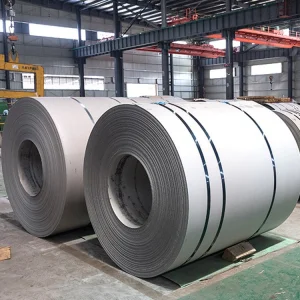
Explore our top-tier export range engineered to strict international tolerances (ASTM A240, ASTM A270, ASTM A554, EN 10088-2, JIS G4304). Click below for instant factory quotes and technical data sheets.



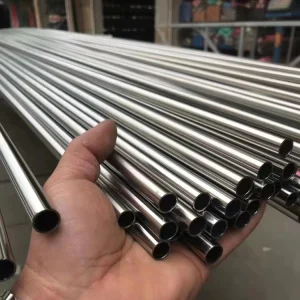

Understanding 480 Grit Surface Topography: Micro-Polishing Mechanics & Metallurgical Standards
In modern high-purity fluid transfer, sanitary architecture, and sterile processing systems, surface roughness ($R_a$) is not merely an aesthetic parameter—it is a critical mechanical specification governing fluid dynamics, corrosion resistance, bio-fouling resistance, and cleanability. A 480 Grit Stainless Steel Pipe occupies the upper echelon of mechanical surface finishing, bridging the technical bridge between standard industrial satin/hairline finishes (180–320 grit) and ultra-high-vacuum electropolished (EP) mirrors (600–800+ grit).
To understand the engineering superiority of a 480 grit finish, one must analyze the micro-tribological transformation during abrasive polishing. Standard mechanical grinding utilizes coarse abrasive grains that gouge microscopic furrows into the stainless steel matrix. In contrast, 480 grit processing employs ultra-fine synthetic silicon carbide or aluminum oxide grains (average particle size $\approx 22 - 28\ \mu\text{m}$) mounted on precision automated orbital polishing heads under controlled liquid cooling emulsions.
Surface Roughness ($R_a$) Calibration
A 480 grit mechanical polish consistently achieves an Arithmetical Mean Roughness ($R_a$) value between 0.08 μm and 0.15 μm (3.15 to 5.9 micro-inches). This microscopic smoothness eliminates deep valleys where chlorides, microbes, and moisture accumulate.
Chromium Oxide Film Uniformity
The mechanical grinding energy generated during multi-pass 480 grit polishing induces micro-plastic shear deformation at the surface layer ($10-50\ \text{nm}$ deep), promoting immediate passive re-oxidation ($Cr_2O_3$) when exposed to controlled atmosphere or chemical passivation.
Orbital Weld Seam Integration
For welded stainless steel pipes (TIG/Plasma continuous longitudinal weld), 480 grit micro-polishing completely levels the internal and external weld bead profile, preventing local stress concentration and heat-affected zone (HAZ) corrosion pit formation.
Metallurgical Insight: Grit Size vs. Surface Roughness ($R_a$) Correlation
A common misconception in procurement is confusing belt mesh count with absolute surface roughness. While belt mesh indicates abrasive density (480 mesh per linear inch), the final $R_a$ depends heavily on line speed, pressure, lubrication lubricant chemical composition, and post-polishing passivation. Chinese tier-1 factories utilize multi-stage polishing lines (8 to 16 heads) transitioning sequentially from 180 → 240 → 320 → 400 → 480 grit to guarantee uniform surface geometry across thousands of meters.
Comparison of Mechanical Surface Finishes in Industrial Stainless Steel Tubing
| Finish Designation | Abrasive Mesh | Target $R_a$ Value ($\mu\text{m}$) | Target $R_a$ Value ($\mu\text{in}$) | Primary Industrial Objective |
|---|---|---|---|---|
| 180 Grit (Satin) | 180 Mesh | $0.40 - 0.60\ \mu\text{m}$ | $16 - 24\ \mu\text{in}$ | General structural frames, architectural handrails, exterior trim. |
| 320 Grit (Fine Satin) | 320 Mesh | $0.20 - 0.35\ \mu\text{m}$ | $8 - 14\ \mu\text{in}$ | Commercial kitchen equipment, dairy transport, elevator interiors. |
| 480 Grit (Micro-Polish) | 480 Mesh | $0.08 - 0.15\ \mu\text{m}$ | $3.15 - 5.9\ \mu\text{in}$ | High-purity pharmaceutical piping, sanitary food/beverage lines, high-end marine architectural fittings. |
| 600 Grit (Mirror/EP) | 600+ Mesh / EP | $< 0.05\ \mu\text{m}$ | $< 2.0\ \mu\text{in}$ | Semiconductor gas delivery, ultra-pure water (UPW) systems, bio-reactors. |
Global Commercial & Industrial Landscape: Market Intent & Sourcing Shift
The global demand for high-precision, fine-grit polished stainless steel pipes has experienced an unprecedented surge over the past decade. Driven by stringent international health standards (ASME BPE, EHEDG, FDA), expanding pharmaceutical bio-processing hubs in Europe and North America, and booming architectural infrastructure projects across the Middle East and Southeast Asia, engineering procurement teams are actively migrating toward specialized mills capable of delivering high-grit finishes with verified surface profiles.
Pharmaceutical & Biotechnology Sector
Clean-in-place (CIP) and Sterilize-in-place (SIP) protocols require fluid transfer pipes that eliminate bacterial adhesion sites. 480 grit inner-diameter (ID) micro-polished tubing drastically reduces biofilm buildup and minimizes sanitization chemical usage.
High-End Architecture & Coastal Balustrades
In aggressive marine and urban environments, 480 grit polished 316L and Duplex 2205 structural tubing exhibits superior resistance to atmospheric pitting and tea-staining compared to conventional brushed finishes.
Food, Beverage & Dairy Processing
Sanitary liquid food lines demand zero flavor cross-contamination. Smooth 480 grit inner walls allow viscous fluids (dairies, syrups, oils) to flow with minimal shear stress and optimal pump power efficiency.
Comparative Regional Sourcing Dynamics
Historically, European and North American buyers relied on localized re-drawers and polishers for 480 grit tubing. However, high labor overheads, energy inflation, and strict environmental emissions capping have escalated western production costs by 40%–60%. This structural shift has positioned China as the premier manufacturing superpower for precision-polished stainless steel, delivering unmatched economies of scale without sacrificing quality or chemical traceability.
China's Supply Chain Efficiency & 2026 Comprehensive B2B Pricelist Benchmark
China's stainless steel manufacturing ecosystem—centered around key industrial clusters in Wuxi (Jiangsu Province) and Foshan (Guangdong Province)—operates with unprecedented vertical integration. From upstream nickel pig iron (NPI) refining and continuous casting slabs at mega-mills (Tsingshan, TISCO, Baosteel) to high-speed cold strip slitting, high-frequency TIG welding, and multi-head 480 grit orbital polishing, every step takes place within a 50-kilometer radius.
This localized cluster model drastically minimizes intermediate freight costs, reduces lead times by 30-40%, and allows Chinese manufacturers to offer highly flexible minimum order quantities (MOQs) for custom pipe dimensions.
2026 Benchmark B2B Pricelist Matrix for China Stainless Steel 480 Grit Pipe
*Note: Prices below reflect average FOB China port (Shanghai/Ningbo/Shenzhen) market rates based on prime nickel and chromium raw material cost baselines. Actual quotes vary based on wall thickness, outer diameter (OD), certification scope, and batch quantity.
| Stainless Grade | Pipe Type & Standard | Outer Diameter (OD) Range | Wall Thickness (WT) Range | FOB China Benchmark Price (USD / Ton) | FOB Benchmark Price (USD / Meter) |
|---|---|---|---|---|---|
| AISI 201 (High Mn/Ni) | Welded Decorative / Structural (ASTM A554) | 12.7 mm – 101.6 mm | 0.5 mm – 3.0 mm | $1,350 – $1,650 / Ton | $0.45 – $2.80 / Meter |
| AISI 304 (UNS S30400) | Welded Sanitary / Ornamental (ASTM A270/A554) | 9.5 mm – 159.0 mm | 0.8 mm – 4.0 mm | $2,250 – $2,650 / Ton | $1.10 – $8.50 / Meter |
| AISI 304L (Low Carbon) | Welded Industrial / Fluid Line (EN 10217-7) | 15.0 mm – 219.1 mm | 1.0 mm – 6.0 mm | $2,350 – $2,780 / Ton | $1.35 – $14.20 / Meter |
| AISI 316L (UNS S31603) | Sanitary Process Pipe (ASTM A270 / DIN 11850) | 12.7 mm – 219.1 mm | 1.0 mm – 5.0 mm | $3,400 – $3,950 / Ton | $2.10 – $22.50 / Meter |
| Duplex 2205 (S31803) | High Corrosion / Offshore Structural | 21.3 mm – 168.3 mm | 1.5 mm – 8.0 mm | $4,200 – $4,850 / Ton | $3.80 – $35.00 / Meter |
Sourcing Advisory: Key Factors Driving 480 Grit Pricing Premiums
1. Internal vs. External Polishing: Polishing the outer diameter (OD) to 480 grit is standard. Outer + Inner Diameter (OD + ID) dual-surface 480 grit polishing increases processing time and requires specialized internal lance polishing units, adding an estimated 8%–15% cost premium.
2. Annealing & Passivation: Bright Annealed (BA) pipes undergo high-temperature hydrogen furnace treatment, preventing surface oxidation before 480 grit mechanical finishing, yielding superior corrosion protection.
Technical Roadmap: Next-Generation Surface Innovations & Smart Manufacturing
The manufacturing landscape for high-grit stainless steel pipes is undergoing a rapid technological evolution driven by AI-driven automated quality inspection, hybrid polishing methodologies, and green sustainable chemical management.
AI Laser Profilometry Inspection
Leading Chinese mills are replacing manual surface gauge sampling with in-line, 360-degree high-speed laser profilometers. This tech measures $R_a$, $R_z$, and micro-scratch depth continuously at line speeds up to 30 meters/minute, guaranteeing 100% defect-free output.
Hybrid Mechanical-Electrochemical Polishing
By combining multi-pass 480 grit mechanical belt grinding with a secondary micro-electrochemical flash pass, manufacturers can achieve ultralow roughness ($R_a < 0.05\ \mu\text{m}$) while removing micro-residual stress layers without costly traditional electropolishing setups.
Closed-Loop Lubricant & Zero-VOC Emulsions
Modern Chinese factories operate closed-loop ceramic filtration systems that recycle 98.5% of polishing coolant fluids and capture airborne metallic micro-dust, fulfilling strict ISO 14001 environmental compliance guidelines.
Localized Engineering Application Scenarios & Real-World Deployment
To assist procurement managers and mechanical engineers in selecting the correct grade and specification, we examine three detailed deployment scenarios across major global industrial sectors:
Scenario A: Pharmaceutical Cleanroom Water-for-Injection (WFI) Loop (Western Europe)
- Material Specification: AISI 316L (Low Carbon), Seamless or TIG Welded, Outer Diameter 38.1 mm x 1.65 mm Wall Thickness.
- Surface Finish: Internal & External 480 Grit Micro-Polished + Citric Acid Chemical Passivation ($R_a \le 0.12\ \mu\text{m}$).
- Engineering Rationale: Standard 320 grit piping exhibited slight bio-film build-up after 18 months of thermal cycling. Upgrading to 480 grit inner polish extended CIP maintenance intervals from 6 months to 24 months, reducing plant downtime costs by €120,000 annually.
Scenario B: Coastal High-Rise Architectural Railing Systems (Southeast Asia)
- Material Specification: AISI 316 / Duplex 2205 Slotted & Round Decorative Tubing, 50.8 mm OD x 2.0 mm WT.
- Surface Finish: External 480 Grit Satin Polish with Clear Anti-Fingerprint Nano-Coating.
- Engineering Rationale: Exposed to humid, high-salinity air (marine environment), standard 240 grit brushed tubes suffered from severe surface pitting ("tea-staining") within 12 months. The 480 grit micro-smooth surface reduced salt crystal retention by 85%, maintaining pristine visual aesthetics.
Scenario C: Automated Dairy Processing & Cheese Whey Transfer Lines (North America)
- Material Specification: SUS304 Sanitary Tubing to ASTM A270, 76.2 mm OD x 2.0 mm WT.
- Surface Finish: Internal 480 Grit Polish with Sanitary Orbital Weld Ends.
- Engineering Rationale: High-fat dairy liquids deposit residual organic films on rough surfaces. The ultra-smooth 480 grit surface drastically lowered friction drag during high-volume pumping, reducing pump energy consumption by 4.2%.
Quality Assurance, Compliance Standards & Global Export Logistics
Sourcing high-grit polished stainless steel pipes from overseas requires rigorous compliance verification and specialized export packaging to protect mirror-like surface finishes from corrosion, moisture, and mechanical scuffing during ocean transit.
Quality Control Protocol Checklist for 480 Grit Direct-Mill Orders
1. Profilometer Surface Audits
Every production lot undergoes 10-point surface roughness measuring using calibrated contact stylus profilometers. Test reports record $R_a$, $R_z$, and $R_q$ metrics, fully attached to the EN 10204 3.1 MTC.
2. Eddy Current & Hydrostatic Testing
100% of welded and seamless tubes undergo in-line Eddy Current flaw detection (ASTM E426) and hydrostatic pressure testing up to 20 MPa to ensure seam integrity under extreme line pressure.
3. Positive Material Identification (PMI)
Handheld X-ray Fluorescence (XRF) analyzers verify chemical composition (Cr, Ni, Mo, Mn) for every single bundle prior to container loading, ensuring absolute zero grade-mix risk.
Export Packaging Engineering for High-Grit Tubing
To preserve the pristine 480 grit micro-finish across thousands of sea miles, professional Chinese manufacturers enforce multi-layer protective packaging:
- Single Tube PE Sleeve Wrapping: Each individual pipe is inserted into a 0.08mm thick polyethylene protective plastic sleeve.
- Plastic End Caps: Both pipe ends are sealed with PE dust-proof plugs to prevent internal contamination and moisture ingress.
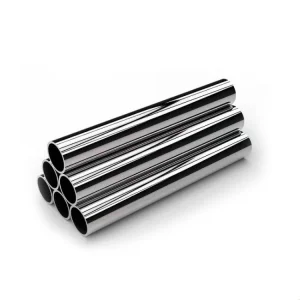
- Heavy-Duty Wooden Crate / Frame Bundling: Hexagonal bundles are wrapped in waterproof woven plastic fabrics, strapped with steel banding, and secured in fumigated ISPM-15 wooden crates for crane handling.
China Stainless Steel Product Portfolio & Direct Mill Sourcing
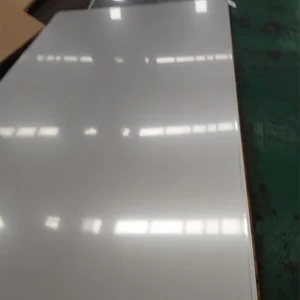
Select from our comprehensive inventory of prime-quality pipes, coils, sheets, and strips. Customized sizing, custom grit polishing, and OEM fabrication available on request.

Frequently Asked Questions (FAQ): Direct Sourcing & Engineering Insights
Detailed technical answers to common B2B procurement, metallurgical, and international logistics questions.