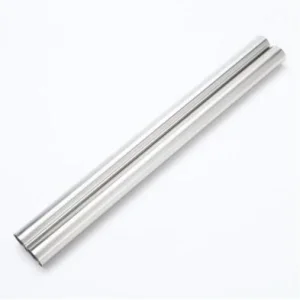
Precision Engineered Tubing & Industrial Mill Solutions
Select from our certified range of industrial stainless steel pipes, sheets, and processed coils manufactured to international standards.




1. Global Commercial & Industrial Status of Honed Stainless Steel Tubing
Understanding the shift in high-precision fluid power, subsea actuators, and ultra-clean pharmaceutical conveyance.
Market Equilibrium & Global Supply Chain Dynamics
Honed stainless steel tubing represents the pinnacle of internal bore refinement in the global tubular goods market. Characterized by strict dimensional tolerances—typically ISO H7 to H11—and extremely low surface roughness (Ra ≤ 0.2 µm), honed stainless tubes serve as the critical housing material for pneumatic and hydraulic cylinders operating in aggressive environments.
China's manufacturing ecosystem has evolved from high-volume standardized mill rolling to ultra-precision secondary processing. Premier Chinese manufacturers leverage raw feedstock from tier-one steelmakers like Tsingshan, TISCO, POSCO, and Baosteel, pairing advanced metallurgy with state-of-the-art multi-pass hone technology. Consequently, global original equipment manufacturers (OEMs) across Europe, North America, and the Asia-Pacific region increasingly rely on Chinese precision mills for critical-path hydraulic cylinder barrels, marine motion compensation systems, and hygienic sanitary lines.
2. Precision Manufacturing Mechanics & Surface Engineering
Analyzing cold drawing, skiving vs. abrasive honing, and passivation dynamics.
Cold Drawing & Annealing Matrix
Prior to honing, seamless or heavy-wall welded stainless tubes undergo cold pilgering or multi-stage cold drawing through tungsten carbide dies. This process aligns grain structure and improves yield strength. Bright annealing in hydrogen atmospheres prevents scaling and preserves the chromium content essential for self-healing passive oxide films.
Abrasive Honing vs. Skiving & Roller Burnishing
Traditional abrasive honing uses expanding stone heads (CBN or Diamond) with cross-hatch rotation, ideal for heavy walls and high-alloy grades (e.g., 316L, 2205). Skiving and Roller Burnishing (SRB) cuts machining times on long lengths, cold-working the surface to create compressive residual stress and a mirror-like finish.
Passivation & Internal Metrology
Honing stainless steel demands specialized non-contaminating cutting fluids to prevent iron pickup. Post-honing citric or nitric acid passivation removes free iron, restoring the corrosion-resistant Cr₂O₃ layer. Every tube undergoes 3D laser profilometry to verify concentricity and surface finish.
| Parameter / Grade | Austenitic 304 / 304L | Marine-Grade 316 / 316L | Duplex 2205 (UNS S31803) | Super Duplex 2507 (S32750) |
|---|---|---|---|---|
| Internal Roughness (Ra) | 0.10 - 0.20 µm (Honed) | 0.08 - 0.15 µm (Electro-honed) | 0.15 - 0.25 µm (Honed) | 0.15 - 0.25 µm (Honed) |
| Bore Tolerance | ISO H8 / H9 | ISO H7 / H8 | ISO H8 | ISO H8 / H10 |
| Yield Strength (Rp0.2 MPa) | ≥ 205 | ≥ 220 | ≥ 450 | ≥ 550 |
| Pitting Resistance (PREN) | 18.0 - 20.0 | 23.0 - 25.0 | 32.0 - 35.0 | ≥ 42.0 |
| Primary Application | Pneumatics, Factory Automation | Chemical Actuators, Offshore | Subsea Valves, Heavy Duty Oil/Gas | Extreme Chloride, Seawater Actuation |
3. Macro Industry Solutions & Engineering Integration
Tailored mechanical and metallurgical solutions addressing critical failure points in fluid power and structural applications.
Subsea Hydraulics & Offshore Actuation
Offshore oil rigs and subsea control modules operate under high hydrostatic pressures and chloride exposure. Standard carbon steel hydraulic cylinders suffer from rapid pit corrosion and seal failure. Honed 316L and Duplex 2205 tubes provide high yield strength and a low-friction bore, preventing fluid bypass and seal degradation over long service lives.
Pharma & Food-Grade Hygienic Actuators
Sterilization-in-Place (SIP) and Clean-in-Place (CIP) protocols require fluid contact surfaces free of microscopic cavities where bacteria can breed. Electropolished and honed SUS304L/316L tubes deliver internal roughness below Ra 0.1 µm, meeting 3-A Sanitary Standards and EHEDG guidelines for pharmaceutical filling equipment.
Aerospace & Defense Flight Controls
Weight reduction paired with mechanical strength requires thin-walled, high-strength honed stainless tubing (such as 17-4PH or 316Ti). These components maintain stable linear motion under thermal cycling and extreme vibration without micro-galling.
4. Regional Application Dynamics & Industry Trends
How regional compliance, industrial specialization, and green technologies drive specific material demands.
North America: Hydraulic Retrofits & Energy Sector
Demand centers on heavy-wall 304/316 honed tubes for agricultural machinery, hydraulic fracturing rigs, and shale gas extraction systems. Compliance with ASTM A269 / A213 standards is mandatory, with buyers favoring pre-passivated, ready-to-assemble cylinder barrels.
Europe: Automation, Robotics & DIN/EN Standards
Driven by Industry 4.0 automation, European buyers require strict adherence to EN 10305-1/4 dimensional tolerances. The focus is on lightweight, ultra-smooth honed tubes for high-speed pneumatic actuators in automotive assembly lines.
Asia-Pacific & Middle East: Desalination & Solar Tracking
Middle Eastern desalination plants demand Super Duplex 2507 honed tubes to handle extreme salinity. Meanwhile, APAC green hydrogen production and solar tracking actuators drive high-volume procurement of cost-effective 201/304 honed assemblies.
5. Technological Roadmap & Future Outlook (2025–2035)
Next-generation innovations shaping the future of honed stainless steel tubular manufacturing.
Real-Time In-Line Bore Metrology
Integration of optical coherence tomography (OCT) and AI-assisted laser profilometers directly onto the honing machine arbor. This allows real-time tool adjustment to achieve sub-micron concentricity and eliminate out-of-round taper.
Nano-Composite Low-Friction Surface Texturing
Combining traditional honing cross-hatching with femtosecond laser surface texturing (LST). Micro-dimples created on the honed surface hold lubricant film under severe load, reducing piston seal friction coefficients by up to 40%.
Eco-Friendly Closed-Loop Chemical Honing
Transitioning from oil-based honing fluids to biodegradable synthetic ester emulsions and closed-loop filtration systems, drastically reducing volatile organic compound (VOC) emissions while enhancing chip evacuation.
6. Frequently Asked Questions (Technical Sourcing Guide)
Direct engineering insights answering critical buyer and technical queries.
What is the difference between honed stainless steel tubing and skived & roller burnished (SRB) tubing?
Honing uses expanding abrasive stones rotating and reciprocating inside the tube bore to remove metal mechanically. It works on virtually any alloy wall thickness and yields a classic cross-hatch pattern ideal for holding seal lubrication. Skiving and Roller Burnishing (SRB) is a two-step process where a cutting head skives the bore, followed by rollers that cold-work and smooth the surface. SRB is faster for high-volume carbon and standard austenitic grades, but conventional honing remains superior for heavy-wall tubing, high-nickel alloys, and duplex stainless steels where cold-work hardening creates machining challenges.
Which stainless steel grade should I choose for hydraulic cylinder barrels in marine environments?
For standard marine splash zones and coastal hydraulics, 316 / 316L stainless steel is recommended due to its 2–3% molybdenum content, which offers strong resistance to pitting corrosion from chlorides. For severe subsea, offshore drilling, or high-pressure applications, Duplex 2205 or Super Duplex 2507 is preferred. Duplex alloys provide roughly double the yield strength of 316L, allowing thinner wall designs while providing superior pitting resistance (PREN > 35–42) and stress-corrosion cracking immunity.
What dimensional and surface tolerances are standard for honed stainless steel tubes?
Standard honed internal bore tolerances follow ISO H8 or H9, with high-precision orders reaching ISO H7. Internal surface roughness (Ra) typically ranges between 0.1 µm and 0.2 µm (4 to 8 micro-inches). Straightness tolerances are typically controlled within 1:1000 mm to ensure smooth piston stroke movement without localized binding or seal wear.
How do Chinese manufacturers control internal oxidation and passivation during honed tube production?
Leading Chinese mills implement bright hydrogen annealing furnaces prior to final hone passes to maintain scale-free surfaces. Post-honing, tubes undergo ultrasonic degreasing to eliminate hone fluid residues, followed by an acid passivation soak (per ASTM A967 standards). This restores the passive chromium-oxide surface film, which is verified via salt spray testing and ferroxyl testing for free iron contamination.
Can honed stainless steel tubing be welded without destroying the internal bore geometry?
Yes, but weld parameters must be carefully managed. When welding end caps, flanges, or ports to honed tubing, heat input must be minimized using TIG (GTAW) or Orbital Laser Welding with argon back-purging to prevent internal sugar-scaling. Proper heat sinks or copper backing rings prevent localized thermal distortion in the honed cylinder bore.
What mill test certificates (MTC) and quality documentation accompany export shipments?
Shipments include EN 10204 3.1 or 3.2 Inspection Certificates, which detail chemical composition (heat analysis), mechanical properties (tensile, yield, elongation), hardness values, hydrotest or eddy current test results, dimensional measurement sheets, and passivation certification.
Explore Additional Industrial Stainless Steel Solutions
Direct factory sourcing options covering industrial welded pipes, decorative tubes, curtain rods, and super duplex plates.