
Featured Precision Stainless Steel Coil, Sheet & Pipe Series
Direct factory inventory and customized precision processing from our Wuxi manufacturing hub. Explore certified products with complete material traceability.
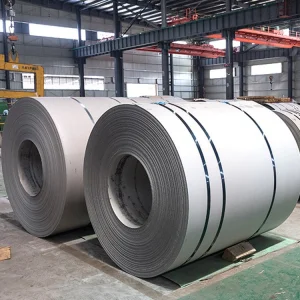
CE Certification Hot Rolled Stainless Steel Coils from China Suppliers
Request Quote & Specs
Custom 2507 Super Duplex Steel Plate Supplier, Quotes
Request Quote & Specs
Wholesale Cold Rolled Stainless Steel Sheet - China Factory Processing
Request Quote & Specs
China Stainless Steel Pipe Factory - Direct Supplier with Certification
Request Quote & Specs
CE Certification High-Quality SUS304/304L Stainless Steel Strips
Request Quote & Specs
Custom High-Quality 316L Stainless Steel Sheet from China Factory
Request Quote & Specs
CE Certification Hot Rolled Stainless Steel Coils - Thick & Durable
Request Quote & Specs
Wholesale High-Quality SUS304 Stainless Steel Cold-Rolled Plate
Request Quote & Specs1. Metallurgical Breakdown: Titanium Stabilization Mechanism in Grade 321 (UNS S32100 / 1.4541)
In high-temperature industrial processing, standard austenitic stainless steels like AISI 304 are highly vulnerable to intergranular corrosion (IGC) when exposed to the critical sensitization temperature zone between 425°C and 850°C (800°F – 1500°F). Within this thermal band, carbon atoms rapidly diffuse to the grain boundaries and combine with chromium to precipitate Chromium Carbide ($Cr_{23}C_6$). This depletes the adjacent matrix of elemental chromium below the 10.5% threshold required to maintain a protective, self-healing passive chromium oxide ($Cr_2O_3$) film.
Grade 321 Stainless Steel Strip solves this fundamental degradation mechanism through Titanium Stabilization. By alloying titanium at a minimum concentration of 5 times the carbon content ($\%Ti \ge 5 \times \%C$), titanium preferentially binds with carbon due to its vastly superior thermodynamic affinity. This forms stable Titanium Carbides ($TiC$) scattered throughout the grain interiors, completely inhibiting chromium carbide formation at the boundaries and preserving the full corrosion-resistant integrity of the alloy during continuous high-temperature service or post-weld cooling.
Key Engineering Rule: $Ti_{min} = 5 \times (C\% + N\%)$ up to a maximum of 0.70%. This chemical stabilization enables 321 stainless steel strip to retain mechanical creep-rupture strength and oxidation resistance at operating temperatures reaching up to 870°C (1600°F), outperforming both 304 and low-carbon 304L in prolonged thermal exposure applications.
Comprehensive Chemical & Mechanical Comparison Matrix
To assist procurement engineers and design specialists in selecting the optimal high-temperature strip material, the table below provides a detailed side-by-side technical comparison between 321, 304, 316L, and 347 grades under ASTM A240 and EN 10088-2 standards.
| Grade / Parameter | UNS S32100 (Grade 321) | UNS S30400 (Grade 304) | UNS S31603 (Grade 316L) | UNS S34700 (Grade 347) |
|---|---|---|---|---|
| Stabilizing Element | Titanium ($Ti \ge 5\times C$) | None | None (Low Carbon) | Niobium / Columbium ($Nb \ge 10\times C$) |
| Chromium (Cr) % | 17.0 – 19.0 | 17.5 – 19.5 | 16.0 – 18.0 | 17.0 – 19.0 |
| Nickel (Ni) % | 9.0 – 12.0 | 8.0 – 10.5 | 10.0 – 14.0 | 9.0 – 13.0 |
| Molybdenum (Mo) % | — | — | 2.0 – 3.0 | — |
| Max Temp. in Air (°C) | 870°C (1600°F) | 800°C (1470°F) | 850°C (1560°F) | 870°C (1600°F) |
| Yield Strength Rp0.2 (MPa) | $\ge 205$ | $\ge 205$ | $\ge 170$ | $\ge 205$ |
| Tensile Strength Rm (MPa) | $\ge 515$ | $\ge 515$ | $\ge 485$ | $\ge 515$ |
| IGC Resistance Post-Weld | Superior | Poor (Sensitizes) | Good (Due to low C) | Superior |
2. Global Industrial Landscape & Evolving B2B Procurement Demand
Analysis of international supply chain shifts, high-temperature material replacement cycles, and emerging technological applications driving demand for precision 321 stainless steel strip.
Aerospace & Defense Demand
Global aerospace OEMs require precision 321 ultra-thin strip ($0.05\text{mm} - 0.5\text{mm}$) for engine insulation blankets, manifold heat shields, and ducting bellows. Strict weight-to-thermal resistance ratios mandate narrow thickness tolerances ($\pm 0.003\text{mm}$) and continuous bright annealed surface quality.
Energy Transition & Hydrogen
With the global push toward clean hydrogen production and high-efficiency solid oxide fuel cells (SOFC), 321 strip is becoming the primary material for reformer components, thermal heat recovery exchangers, and high-temperature gas manifold sealing gaskets.
Automotive Exhaust Bellows
Tier-1 automotive suppliers are upgrading exhaust decoupling flex-tubes and turbocharger connectors to 321 strip. The alloy eliminates intergranular stress corrosion cracking induced by cyclic thermal shock and aggressive engine exhaust gas condensate.
3. The Chinese Manufacturing Edge: Direct Wuxi Factory Efficiency & Quality Control
How Jiangsu Renzhi Holding Group integrates upstream mill raw materials, state-of-the-art cold rolling technology, and automated slitting to deliver cost and quality leadership.
Enables extreme thickness uniformity down to 0.05mm with minimal crown and high surface flatness.
Real-time closed-loop feedback controls strip gauge automatically across the entire length of the coil.
Pure Hydrogen gas environment prevents surface oxidation, delivering a mirror-like BA finish without pickling pits.
Custom width slitting from 3mm to 1250mm with edge shear burr strictly controlled under 5% of material thickness.
By combining upstream raw material contracts with tier-1 Chinese stainless steel smelters—including Tsingshan, TISCO, POSCO China, and Baosteel—our factory eliminates intermediate trading markups while ensuring total control over chemical composition purity. Every batch of 321 strip undergoes rigorous melt-analysis verification to guarantee titanium stoichiometry and minimal non-metallic inclusion levels.
4. Application Engineering: Localized Scenarios & End-Use Performance
Detailed breakdown of how precision 321 stainless steel strip performs across diverse heavy industrial, chemical, and precision manufacturing applications.
Thermal Cracker Expansion Bellows
Used in flexible piping joints for catalytic cracking units and hydrotreaters. Operating under cyclic heat up to 750°C, 321 strip withstands thermal fatigue and prevents localized cracking caused by polythionic acid stress corrosion during unit shutdowns.
Boiler Tubing & Steam Superheaters
Slit 321 strip is roll-formed and high-frequency welded into high-temperature steam tubing. Titanium stabilization ensures weld seam corrosion resistance equal to the parent metal without requiring post-weld solution annealing.
Exhaust Flexible Connectors
Inner and outer braided sleeves and corrugated core tubes fabricated from thin 321 strip absorb engine vibration, reduce stress on turbocharger housings, and resist internal exhaust gas corrosion.
Heating Element Retainers & Conveyors
Perforated and stamped 321 strip parts maintain dimensional stability in continuous heat-treatment furnaces, resisting scaling and oxidation in ambient temperatures up to 870°C.
Engine Thermal Insulation Blankets
Micro-thin 321 foil/strip ($0.05\text{mm} - 0.10\text{mm}$) is embossed and wrapped around jet engine exhaust ducts to reflect thermal radiation and protect sensitive avionics and hydraulic lines.
Spiral Wound Gasket Outer Rings
Precision-slit 321 strip acts as the metallic winding material combined with graphite or PTFE fillers to seal high-pressure, high-temperature chemical reactor flanges safely.
5. China 321 Stainless Steel Strip Pricelist Structure & Cost Drivers
Transparent guide for B2B procurement managers. Understand how alloy surcharges, precision processing fees, and order volumes determine final FOB/CIF quotes.
Calculating the true landed price for imported 321 stainless steel strip requires an understanding of the four primary cost components that make up a factory quotation:
1. Base Metal & Surcharges
Driven by London Metal Exchange (LME) and Shanghai Futures Exchange (SHFE) spot prices for Nickel, Chromium, and Ferro-Titanium. Grade 321 carries a higher alloy surcharge than 304 due to its elevated Nickel range (9.0%-12.0%) and Titanium additions.
2. Cold Rolling & Gauge Surcharges
Thinner gauges require additional cold rolling passes and bright annealing cycles. Strips under 0.20mm (ultra-thin precision foil) involve higher processing costs per metric ton compared to standard gauges (0.50mm - 2.0mm).
3. Slitting & Edge Conditioning
Narrow slitting widths (e.g., < 20mm) increase setup time and shear cutter wear. Options such as rounded edges, deburred edges, or special paper/PE film interleaving add minor processing fees.
Indicative Factory Price Matrix Guidelines (For Budget Estimation)
Note: Prices fluctuate weekly based on raw material spot markets. Contact our engineering sales team for real-time firm quotations.
| Thickness Range (mm) | Width Range (mm) | Surface Finish | Temper / Condition | Indicative Price Range (USD/MT FOB) |
|---|---|---|---|---|
| 0.10mm – 0.30mm | 10mm – 600mm | BA (Bright Annealed) | Soft Annealed (TR Clean) | $2,650 – $3,100 / MT |
| 0.31mm – 0.80mm | 15mm – 1219mm | 2B / BA | Soft Annealed | $2,350 – $2,750 / MT |
| 0.81mm – 3.00mm | 20mm – 1250mm | 2B / No.1 / No.4 | Soft / 1/4 Hard / 1/2 Hard | $2,150 – $2,500 / MT |
6. Quality Assurance, Inspection Protocols & Export Packaging
Rigorous quality control frameworks compliant with international standards, ensuring seamless cross-border shipping and zero defect delivery.
Metallurgical Certification
Every shipment is accompanied by a full Mill Test Certificate (MTC) to EN 10204 3.1 detailing heat number chemical analysis, tensile strength, yield point, hardness, elongation, and grain size testing.
IGC Testing (ASTM A262)
Mandatory intergranular corrosion testing performed according to ASTM A262 Practice E (Strauss Test). Samples are sensitized and boiled in acidified copper sulfate solution to verify absolute immunity to grain boundary attack.
Seaworthy Export Packing
Strips are secured with inner waterproof VCI paper wrap, plastic film seal, corrugated outer protection, and steel strapping on fumigated wooden pallets. Choice of Eye-to-Sky or Eye-to-Wall coiling for automated offloading.
7. Frequently Asked Questions (FAQ) – Technical & Sourcing Knowledge Base
Expert technical answers to common queries raised by international buyers, metallurgists, and supply chain directors regarding 321 stainless steel strip.
What is the difference between 321 and 304L stainless steel strips?
While both grades are designed to resist intergranular corrosion after welding, their protection mechanisms differ. 304L limits carbon content to a maximum of 0.03% to reduce chromium carbide formation, making it suitable for service temperatures up to 425°C. 321 adds Titanium ($\ge 5\times C$) to bind carbon, allowing the strip to operate continuously in high-temperature environments up to 870°C (1600°F) while maintaining superior creep and stress-rupture properties compared to 304L.
Can 321 stainless steel strip be hardened by heat treatment?
No. Grade 321 is a fully austenitic stainless steel and cannot be hardened through thermal heat treatment (quenching). It can only be hardened through cold working (cold rolling). Jiangsu Renzhi supplies 321 strip in various tempers ranging from Soft Annealed (ANN) to 1/4 Hard, 1/2 Hard, and Full Hard (TR) depending on your mechanical forming requirements.
Why is Titanium stabilization preferred over Niobium (347) for standard commercial applications?
Titanium (Grade 321) and Niobium (Grade 347) both effectively stabilize carbon. However, Titanium is more abundant and cost-effective than Niobium, making 321 stainless steel strip significantly more economical for general automotive, HVAC, boiler, and petrochemical uses. 347 is typically reserved for specialized aerospace components where titanium vaporization across intense arc welding is a concern.
What slit width and thickness tolerances can your factory achieve?
Utilizing high-precision Sendzimir 20-high cold rolling mills and automated rotary shears, our factory achieves thickness tolerances as tight as $\pm 0.003\text{mm}$ to $\pm 0.01\text{mm}$ and slitting width tolerances down to $\pm 0.05\text{mm}$ for strip widths starting from 3mm.
Is 321 stainless steel magnetic?
In the fully annealed condition, Grade 321 is non-magnetic (or has extremely low magnetic permeability). However, like most austenitic stainless steels, light to severe cold rolling can induce a partial martensitic phase transformation, introducing slight magnetic response. Full non-magnetic properties can be restored via solution annealing if required.
What surface finishes are available for 321 precision strip?
We supply 321 strip in 2B (Cold Rolled, Annealed and Pickled), BA (Bright Annealed in Pure Hydrogen), TR (Cold Rolled Temper Passed), and polished finishes including No.4 (Brushed/Satin) and 8K Mirror, protected with PE/Laser film if required.
What is your typical lead time and minimum order quantity (MOQ)?
For standard stock sizes, shipment can be dispatched within 5 to 7 days. For custom slitting, specific tempers, or thin-gauge cold rolling, our standard lead time is 15 to 20 business days. Our flexible production lines accept MOQs starting from 500 kg for custom widths, with trial batch support for prototype testing.
How do you prevent surface scratches and edge burrs during slitting?
We use high-hardness carbide slitting knives maintained on precision CNC grinders. Automated tension leveling and paper/protective film interleaving lines prevent surface-to-surface abrasion during coiling, guaranteeing clean, burr-free edges ready for high-speed stamping or roll forming.
Complete Stainless Steel Product Catalog & Related Industrial Solutions
Explore our full line of industrial welded pipes, lower carbon stainless steel tubes, super duplex plates, and specialized perforated metal sheets.
High-Quality Stainless Steel Industrial Welded Pipes Direct Quotes
Request Quote & Specs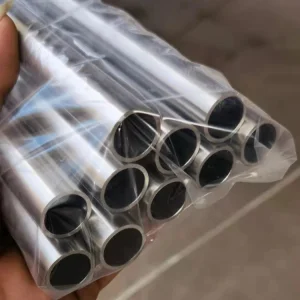
Wholesale SUS304/304L Lower Carbon Stainless Steel Pipe Factory
Request Quote & Specs
Custom China SUS304/304L Low Carbon Stainless Steel Pipe Suppliers
Request Quote & Specs
Wholesale 2507 Super Duplex Steel Plate - High Strength Alloy
Request Quote & Specs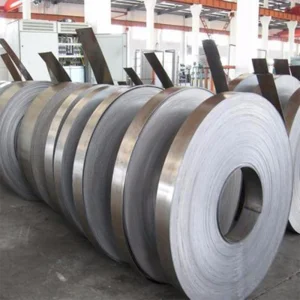
China High-Quality 201 Stainless Steel Strip/Coil Supplier Discounts
Request Quote & Specs
Wholesale China Hot Rolled Stainless Steel Coil Suppliers
Request Quote & Specs
Custom China Perforated Stainless Steel Sheet Custom Mesh Products
Request Quote & Specs
CE Certification China SUS304/304L Stainless Steel Pipe Suppliers
Request Quote & SpecsRequest Immediate Factory Quotation & Technical MTC Samples
Send your required 321 strip dimensions (Thickness x Width), surface finish, temper, target volume, and destination port. Our metallurgical engineers will respond with detailed pricing and lead times within 24 hours.
Contact Engineering Sales Team