
Certified Stainless Steel Tubes & Metal Sheets
Factory-direct, CE certified stainless steel products engineered for high-pressure structural and corrosion-critical applications.

Wholesale China Perforated Stainless Steel Sheet - High-Quality Metal Mesh
View Product Details
CE Certification Cold Rolled Stainless Steel Sheet - High Strength & Corrosion Resistant
View Product Details
CE Certification Cost-Effective 201 Cold Rolled Stainless Steel Sheet
View Product Details
China 201 Stainless Steel Strip/Coil Manufacturers & Factories
View Product Details
China Cold Rolled Stainless Steel Sheet - Factory Direct Services
View Product Details
CE Certification Stainless Steel Decorative Pipe Supplier & Quotes
View Product Details
Custom Stainless Steel Industrial Welded Pipe Manufacturer & Supplier
View Product Details
China Stainless Steel Industrial Welded Pipe - 201, 304, 316L Materials
View Product Details1. Executive Summary & The Strategic Imperative of CE Certification
In the modern global industrial landscape, the procurement of stainless steel tubing and piping systems transcends basic material acquisition. It represents a critical decision point balancing operational safety, mechanical longevity, chemical resistance, and regulatory compliance. For engineering firms, original equipment manufacturers (OEMs), and international EPC contractors operating within the European Economic Area (EEA) and global export markets, CE Certification for metal tubes is not merely a bureaucratic stamp—it is a rigorous, legally binding assurance of quality and performance under demanding environmental stresses.
Under the European Pressure Equipment Directive (PED 2014/68/EU) and Construction Products Regulation (CPR 305/2011), stainless steel pipes intended for pressure vessels, chemical conveying lines, structural facades, and thermal fluid systems must meet harmonized European standards. Standardized benchmarks such as EN 10217-7 for welded stainless steel tubes and EN 10216-5 for seamless tubing govern essential mechanical parameters, yield strength limits, intergranular corrosion limits, and non-destructive testing (NDT) mandates.
Information Gain Insight: While many global manufacturers claim compliance, true CE-certified stainless steel tube production requires complete metallurgical origin traceability from raw slab sourcing (Tsingshan, TISCO, POSCO, Baosteel) through continuous inline Eddy Current Testing (ECT), hydrostatic pressure verification, and validated Mill Test Reports (MTR) according to EN 10204 3.1/3.2.
2. Global Enterprise B2B Procurement Intelligence & Material Intent
Analyzing global B2B procurement data reveals distinct regional demand vectors and intentional shifts toward specialized stainless steel alloys. B2B purchasers no longer select tubing purely on upfront per-ton pricing; decisions are increasingly driven by Total Cost of Ownership (TCO), lifecycle corrosion mitigation, and decarbonization mandates.
Regional Demand Drivers:
- European Union & United Kingdom: High demand for EN 10217-7 TC1/TC2 certified welded tubes in renewable energy, green hydrogen distribution, pharmaceutical cleanroom equipment, and food/beverage processing systems. Low-carbon variants (304L, 316L) dominate to eliminate carbide precipitation during welding.
- North America (US & Canada): Structural modernization, HVAC heat exchanger upgrades, and heavy chemical processing infrastructure drive high-volume sourcing of dual-certified ASTM A240/A312 and EN standard tubing. High interest in Duplex (UNS S31803 / 2205) for high-chloride oil & gas applications.
- Asia-Pacific & Middle East: Rapid urbanization, mega desalination plants, and offshore energy platforms require super-austenitic and super-duplex (2507) piping capable of handling harsh marine and hypersaline operational environments.
| Stainless Grade | Alloy Family | Chemical Composition Key | PREN Rating | Primary Industrial Applications |
|---|---|---|---|---|
| 201 (UNS S20100) | Austenitic (Cr-Mn) | ~ 17 | Decorative tubing, architectural handrails, indoor furniture, retail fixtures. | |
| 304 / 304L (1.4301/1.4307) | Austenitic (Cr-Ni) | 18 - 20 | Food & dairy transport, sanitary tubing, structural frames, kitchen equipment. | |
| 316 / 316L (1.4401/1.4404) | Austenitic (Cr-Ni-Mo) | 23 - 25 | Chemical processing lines, marine fittings, pharmaceutical pipelines, heat exchangers. | |
| 310S (1.4845) | High-Temp Austenitic | ~ 25 | Furnace combustion tubes, boiler components, high-temperature heat exchangers (< 1150°C). | |
| Duplex 2205 (1.4462) | Austenitic-Ferritic | 32 - 35 | Desalination plants, oil & gas flowlines, chemical tankers, high-stress pressure vessels. | |
| Super Duplex 2507 (1.4410) | Super Duplex | > 42 | Aggressive chloride environments, offshore platforms, subsea manifolds, pollution control. |
3. Macro-Industry Engineering Solutions
Stainless steel metal tubes function as the circulatory system of modern industrial operations. Matching metallurgical characteristics to operational stresses prevents catastrophic failures such as stress corrosion cracking (SCC), pitting, and intergranular decay.
A. Chemical & Petrochemical Processing
In acidic and high-sulfur processing plants, welded pipes must resist severe localized attack. Utilizing 316L and Duplex 2205 CE-certified tubes ensures high resistance to chloride-induced pitting. The addition of molybdenum (2-3%) stabilizes the protective chromium-oxide passive film, preventing media contamination and wall thinning under continuous elevated pressure.
B. Food, Dairy & Hygienic Sanitary Engineering
Hygienic applications require internal surface roughness (Ra) below 0.8 µm, with electro-polished options reaching Ra < 0.4 µm. CE-certified SUS304 and SUS304L tubes prevent bacterial bio-film adhesion, withstand CIP (Clean-In-Place) caustic washdowns, and ensure zero alteration of organic taste or purity profiles.
C. Architectural Structures, Elevators & Decorative Facades
Urban infrastructure relies heavily on structural stainless steel tube profiles (round, square, rectangular). Austenitic 201 and 304 decorative tubes with hairline, 8K mirror, or PVD color coatings offer exceptional aesthetic appeal combined with structural stiffness, eliminating maintenance costs associated with structural carbon steel painting.
4. Technical Roadmap & Advanced Manufacturing Processes
The transition from precision slit coil to high-performance certified tube demands rigorous engineering control across every mill operation:
- Continuous Precision Forming & Welding: High-precision cold-roll forming lines shaped raw strip into precise cylindrical profiles. Automated TIG (Tungsten Inert Gas), Plasma, and High-Frequency Induction (HFI) welding systems ensure full-penetration weld seams with minimal thermal heat-affected zone (HAZ).
- Online Bead Working & Annealing: Weld seams undergo internal and external bead rolling to match the parent metal profile. Bright Annealing (BA) in a protective hydrogen atmosphere at temperatures exceeding 1050°C dissolves precipitated carbides back into the austenitic matrix, restoring peak corrosion resistance and ductility.
- Automated Non-Destructive Testing (NDT): 100% of pressure-rated tubes pass through continuous inline Eddy Current Testing (ECT) systems according to EN 10217-7 standards. Hydrostatic test stations validate pressure containment up to 20 MPa (200 Bar).
- Surface Polishing & Customized End Processing: Fully automated polishing lines yield controlled finishes: 2B mill finish, BA, No.4 satin, 180-600 grit brushed, and 8K mirror polishing. Tube ends are precision squared, bevelled for field welding, or swaged to customer specifications.
5. Global Commercial Status & Supply Chain Resilience
The global stainless steel tube manufacturing landscape is navigating shifting raw material economics, driven primarily by volatile London Metal Exchange (LME) nickel pricing and ferro-molybdenum surcharges. Advanced factories maintain economic resilience through strategic vertical integration—sourcing raw master coils directly from primary mills such as Tsingshan, TISCO, POSCO, and Baosteel.
By controlling slitting, tube forming, heat treatment, and surface finishing under one roof in manufacturing hubs like Wuxi, Jiangsu, modern tube mills insulate global enterprise buyers from intermediate supply chain markups, reduce lead times by 25-35%, and guarantee strict lot-to-lot chemical uniformity.
6. Localization Support, Compliance & Quality Assurance Framework
Overseas project integration requires more than standardized shipping; it demands localized technical alignment and custom packaging solutions:
- Seaworthy Export Packaging: All tube bundles are wrapped in heavy-duty waterproof woven plastic, fitted with protective end caps, and loaded into fumigated steel-framed wooden crates or container cradles to prevent saltwater corrosion and physical impact during transit.
- Full Traceability & Documentation: Every shipment is backed by a comprehensive MTR according to EN 10204 3.1, detailing precise chemical ladle analysis, tensile strength, yield strength, elongation, hardness, flattening tests, flaring tests, and NDT clearance. Third-party inspections via SGS, TÜV, Bureau Veritas (BV), or Lloyd's Register are routinely integrated upon request.
- Custom Machining & Fabrication: On-site capability for precision length cutting (+/- 0.5mm), CNC laser slotting, perforating, end swaging, bending, and specialized surface polishing.
Specialized Industrial Stainless Steel Tubes & Plates
Explore custom material specifications, low-carbon grades, and custom-processed stainless components.

Custom China SUS304 Stainless Steel Cold-Rolled Plate Suppliers - Food Grade
View Product Details
Custom Prime Quality 201 Stainless Steel Pipe - Stair Railings & Household Use
View Product Details
High Quality 201 Stainless Steel Strip/Coil - Excellent Ductility & Hardness
View Product Details
Custom China SUS304 Cold-Rolled Stainless Steel Plate Suppliers & Factory
View Product Details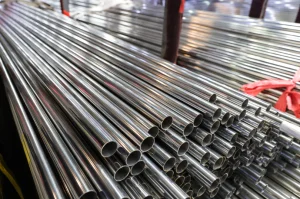
Custom 316L Stainless Steel Weld Pipe Suppliers & Factories
View Product Details
CE Certification SUS304/304L Low Carbon Stainless Steel Pipe Suppliers
View Product Details
Custom China Perforated Stainless Steel Sheet Suppliers - Custom Metal Mesh
View Product Details
CE Certification China Perforated Stainless Steel Sheet - Reliable Factory
View Product DetailsFrequently Asked Questions (Technical & Procurement FAQ)
Clear, engineering-backed answers regarding compliance, material testing, tolerances, and global logistics.
CE Certification for stainless steel metal tubes is primarily governed by the Pressure Equipment Directive (PED 2014/68/EU) and Construction Products Regulation (CPR 305/2011). The technical production standard for welded stainless steel tubes is EN 10217-7, while seamless tubes fall under EN 10216-5. Structural tubing used in architectural applications complies with EN 10296-2 or EN 10210. Compliance verifies that the tubing meets strict limits for chemical composition, mechanical yield strength, impact toughness, and pressure safety.
Under EN 10217-7, Test Category 1 (TC1) requires non-destructive testing (NDT) via Eddy Current or hydrostatic pressure testing along with standard visual, dimensional, and mechanical checks. Test Category 2 (TC2) includes all TC1 requirements plus mandatory longitudinal seam ultrasonic or radiographic testing, intergranular corrosion testing (per EN ISO 3651-2), and impact testing at lower temperatures. TC2 is specified for critical chemical, nuclear, and high-hazard pressure applications.
Selection depends on chloride concentration, operating temperature, and structural stress:
- 304L (1.4307): Suitable for mild outdoor exposure, freshwater systems, and low-chloride food processing.
- 316L (1.4404): Recommended for coastal environments, pharmaceutical plants, and moderate chloride solutions up to ~1000 mg/L ppm due to its 2-2.5% Molybdenum content (PREN ~23-25).
- Duplex 2205 (1.4462): Ideal for high-salinity seawater, desalination, and high-pressure chemical transport (PREN ~32-35). Duplex 2205 offers double the yield strength of 316L, allowing for thinner tube wall design without sacrificing pressure rating.
Yes. All CE certified shipments are accompanied by a validated EN 10204 3.1 Inspection Certificate direct from the factory quality assurance department, detailing chemical heat analysis, mechanical tensile and yield testing, elongation, hardness, flattening, flaring, and 100% NDT inspection results. Independent EN 10204 3.2 Certificates validated by third-party inspection agencies (SGS, TÜV, BV) can be arranged upon project request.
Welded industrial tubes adhere to ISO 1127 / EN 10217-7 tolerance classes (typically D3/T3 or D4/T4 for precision applications). Outer diameter (OD) tolerances range from ±0.75% down to ±0.5%, and wall thickness tolerances are typically controlled within ±10% or ±7.5%. Precision cold-drawn or polished decorative tubes can achieve tighter tolerances according to custom engineering drawings.
Weld seam integrity is maintained through a multi-stage quality protocol: automatic continuous TIG/Plasma/Laser welding with argon gas backing, online weld seam bead rolling, inline continuous Eddy Current NDT testing, followed by post-weld solution annealing at 1050°C to eliminate micro-segregation and internal stress. Offline hydrostatic testing at pressures up to 200 Bar confirms zero leakage across the weld geometry.