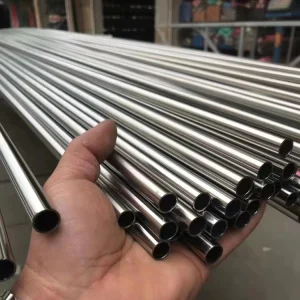
CE Certified Marine & Industrial Tubing Products
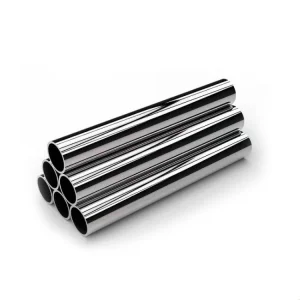
Explore our precision-engineered, factory-direct stainless steel tubing and structural solutions manufactured strictly under European Conformity (CE) and ISO quality standards.
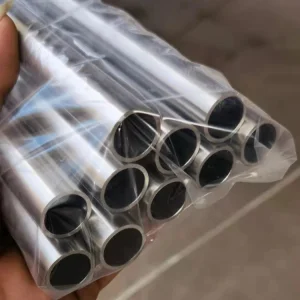
1. Macro-Industry Solutions: Corrosion Physics in Marine Tubing
In marine engineering, offshore energy extraction, naval architecture, and coastal desalination infrastructure, selecting the appropriate metallic conduit is not merely a matter of mechanical strength—it is a critical safety and financial imperative. Marine environments expose structural and fluid-handling materials to an aggressive combination of high chloride concentrations, dissolved oxygen, variable pH levels, microbial organisms, and severe mechanical stress.
As a premier CE Certified Marine Stainless Steel Tubing Supplier, Jiangsu Renzhi Holding Group Co., Ltd. engineer tubing solutions designed to survive the electrochemical demands of saltwater exposure. Understanding why specific alloy compositions succeed or fail requires examining the chemical dynamics of passive film formation, pitting resistance, and intergranular stress corrosion.
Thermodynamics of Pitting and Crevice Corrosion in Marine Ecosystems
The primary breakdown mechanism for stainless steel in seawater is localized pitting attack caused by halide ions—predominantly Chlorides ($\text{Cl}^-$). Standard austenitic steels like SUS304 (UNS S30400) form a protective Chromium Oxide ($\text{Cr}_2\text{O}_3$) passive layer. However, under marine splash zone conditions or stagnant saltwater exposure, chloride ions penetrate weak points in this microscopic film, creating localized galvanic micro-cells.
To quantify a alloy's ability to resist localized pitting attack, corrosion engineers rely on the Pitting Resistance Equivalent Number (PREN) formula:
While standard 304 stainless steel offers a PREN of approximately 18–19 (rendering it vulnerable to chloride pitting above 200 ppm $\text{Cl}^-$), molybdenum-alloyed austenitic grades such as 316L (UNS S31603) reach a PREN of 23–25. For extreme marine applications involving ambient or warm seawater, duplex alloys like Duplex 2205 (UNS S31803 / S32205) achieve PREN values of 35–38, while Super Duplex 2507 (UNS S32750) exceeds PREN 42.
| Stainless Grade | Alloy Structure | Nominal Composition (% Cr - Ni - Mo - N) | PREN Index | Max Chloride Limit (Ambient) | Primary Marine Application |
|---|---|---|---|---|---|
| AISI 201 | Austenitic (Cr-Mn) | 16-18 Cr, 3.5-5.5 Ni, 5.5-7.5 Mn | ~17.0 | < 50 ppm | Indoor coastal architectural fittings, interior handrails |
| AISI 304 / 304L | Austenitic (Cr-Ni) | 18-20 Cr, 8-10.5 Ni, Low C | ~19.0 | < 200 ppm | Freshwater marine equipment, topside non-critical trim |
| AISI 316 / 316L | Austenitic (Cr-Ni-Mo) | 16-18 Cr, 10-14 Ni, 2.0-3.0 Mo | 23.0 - 25.0 | < 1,000 ppm | Marine hydraulic tubing, boat rails, deck hardware, rig piping |
| Duplex 2205 | Austenitic-Ferritic | 22-23 Cr, 4.5-6.5 Ni, 3.0-3.5 Mo, 0.14-0.20 N | 35.0 - 38.0 | < 10,000 ppm | Offshore oil & gas lines, subsea manifold tubing, desalination |
| Super Duplex 2507 | Austenitic-Ferritic | 24-26 Cr, 6-8 Ni, 3-5 Mo, 0.24-0.32 N | > 42.0 | Direct Seawater (> 35,000 ppm) | Subsea hydraulic umbilical lines, heat exchangers, high-pressure SWRO |
2. Global Commercial & Industrial Market Status
The global demand for high-integrity marine stainless steel tubing is experiencing unprecedented structural growth. According to recent industrial market intelligence, the expansion of offshore wind power generation, subsea petroleum exploration in deepwater basins (Brazil, West Africa, Gulf of Mexico), and the urgent global rollout of Seawater Reverse Osmosis (SWRO) desalination facilities are driving annual consumption at a CAGR of 6.8%.
Supply Chain Dynamics & Raw Material Origin Control
Global B2B buyers face volatility in nickel, molybdenum, and chromium spot prices, as well as risks regarding non-conforming mechanical properties from unverified suppliers. Jiangsu Renzhi Holding Group mitigates these supply chain risks by maintaining direct primary mill feedstock partnerships with world-tier steel makers including Tsingshan, TISCO, POSCO, and Baosteel.
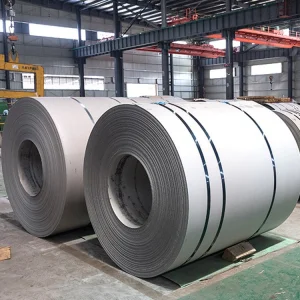
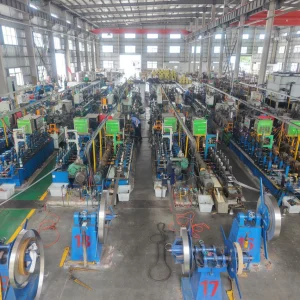
By controlling the supply chain from raw slab and coil slitting to cold drawing, automated TIG/Laser welding, and bright annealing, our Wuxi manufacturing hub guarantees complete batch-to-batch chemical repeatability and mechanical integrity.
Raw Material Traceability
Every coil batch is logged with heat numbers traced directly to primary smelters. Optical Emission Spectrometry (OES) verifies exact chemical composition before slitting.
Precision Processing
Operating over 80 automated welded tube lines alongside 5 continuous coil slitting installations, maintaining outer diameter (OD) tolerances within ±0.05mm.
Quality Testing Matrix
Integrated Non-Destructive Testing (NDT) including inline Eddy Current testing, Hydrostatic pressure testing up to 30MPa, and pneumatic underwater leak detection.
3. CE Certification, Localized Compliance & Quality Assurance
For European marine contractors, naval defense procurement agencies, and international engineering engineering, procurement, and construction (EPC) firms, CE certification is a non-negotiable regulatory barrier. Tubing utilized in pressure systems, hull penetrations, or structural frameworks within the European Economic Area (EEA) must strictly comply with EU Directives.
Deconstructing CE Directives for Marine Tubing
Our manufacturing facilities maintain accredited quality management systems fulfilling the key European standards:
- Pressure Equipment Directive (PED 2014/68/EU): Mandatory for seamless and welded stainless steel tubing integrated into marine boilers, heat exchangers, hydraulic control circuits, and pressure vessels operating above 0.5 bar. Certification confirms material ductility, weld seam factor ($z=1.0$), and impact toughness at sub-zero temperatures.
- Construction Products Regulation (CPR 305/2011 & EN 1090-2): Applies to structural stainless steel tubing deployed in offshore platforms, wind turbine jackets, dock facilities, and structural marine handrails requiring Factory Production Control (FPC) audit compliance.
- EN 10217-7 & EN 10216-5 Standards: Technical delivery conditions for welded and seamless stainless steel tubes for pressure purposes, defining strict tolerances, grain size parameters, and intergranular corrosion test requirements.
EN 10204 3.1 / 3.2 Material Test Certificate (MTC) Guarantee
Every shipment of marine tubing dispatched from our Wuxi manufacturing plant is accompanied by a full EN 10204 3.1 Material Test Certificate (or 3.2 Certificate verified by independent third-party inspectors such as Lloyd's Register, DNV, Bureau Veritas, or TÜV Rheinland upon request).
What Our EN 10204 3.1 Certification Covers:
4. Localized Application Scenarios & Engineering Practices
Different marine environments impose vastly different stress profiles on stainless steel tubing. Below are the specialized localized application scenarios where our marine tubing solutions are deployed worldwide:
Subsea Hydraulics & Control Lines
High-pressure hydraulic instrumentation tubing for subsea valves, BOP stack controls, and umbilical lines requires seamless 316L, Duplex 2205, or Super Duplex 2507 tubing with ultra-smooth internal surface finishes (Ra < 0.4 µm) to prevent seal wear and micro-particulate contamination.
Commercial Yacht Rigging & Guardrails
Superyachts and commercial passenger vessels demand flawless visual aesthetics combined with saltwater durability. Our mirror-polished (8K) and hairline-brushed 316L ornamental tubes provide high yield strength and stain resistance against salt spray mist.
SWRO Desalination High-Pressure Piping
Reverse osmosis desalination plants operate at feed pressures between 55 to 80 bar with brine concentration levels reaching 70,000 ppm. Duplex 2205 welded industrial pipes engineered to ASTM A790 eliminate pitting and crevice corrosion while providing high structural safety factors.
Offshore Wind Jacket Foundations
Structural tubing utilized in offshore wind turbine access ladders, J-tubes, and platform handrails experiences cyclic wave fatigue and atmospheric marine exposure. Heavy-wall structural pipes manufactured under EN 10210 / EN 10219 ensure long-term structural integrity.
5. Technical Roadmap & Future Metallurgy Outlook
As marine exploration pushes into deeper waters and the global maritime sector moves toward zero-emission hydrogen propulsion and ammonia bunkering, material requirements are undergoing a fundamental transformation. Renzhi Stainless Steel is actively investing in next-generation metallurgical research and eco-friendly manufacturing technologies.
Integration of automated, closed-loop electropolishing systems that achieve internal surface roughness down to Ra 0.15 µm. Nanoscale electrochemical passivation enhances the Cr-to-Fe surface ratio from standard 1.5:1 up to 3.0:1, doubling localized pitting resistance times in ASTM B117 salt spray tests.
To safeguard marine projects against wild nickel price fluctuations, our metallurgical R&D team is scaling production of Nitrogen-strengthened Lean Duplex alloys (e.g., UNS S32101 / S32304). These alloys match 316L corrosion resistance while providing double the mechanical yield strength at lower material costs.
Targeting a 45% carbon footprint reduction across our Wuxi tubing mill by transitioning melt feedstock to 100% Electric Arc Furnace (EAF) steelmaking powered by green solar and hydrogen energy. Full digital product passports (DPP) will provide cradle-to-gate carbon transparency for European buyers.
6. Frequently Asked Questions (Q&A) for Marine Procurement
Find detailed engineering answers regarding material selection, CE certification, welding parameters, and supply chain logistics for marine stainless steel tubing.
Q1: What is the main difference between SUS304 and SUS316L for marine tubing?
SUS304 contains 18% Chromium and 8% Nickel, providing adequate corrosion resistance for freshwater or mild atmospheric conditions. However, in marine environments containing elevated chloride levels, SUS304 rapidly suffers from pitting corrosion. SUS316L contains 2–3% Molybdenum (Mo) and has low carbon (<0.03%), which drastically raises its Pitting Resistance Equivalent Number (PREN) and prevents intergranular chromium-carbide precipitation during welding. Thus, SUS316L is the minimum recommended grade for marine splash zones and saltwater fluid handling.
Q2: Why is CE certification mandatory for importing marine tubing into Europe?
Under the European Union Pressure Equipment Directive (PED 2014/68/EU) and Construction Products Regulation (CPR 305/2011), any stainless steel tube installed in a pressurized system or load-bearing marine structure within the EU must carry CE marking. This certifies that the manufacturer operates a verified Factory Production Control (FPC) system, conducts non-destructive testing, provides full material traceability, and guarantees mechanical impact properties.
Q3: Should I choose Seamless or Welded tubing for marine hydraulic lines?
For dynamic subsea hydraulic control circuits operating above 250 bar, seamless tubing (per ASTM A269 / EN 10216-5) is traditionally preferred due to its uniform wall thickness and absence of a longitudinal weld seam. However, for low-to-medium pressure marine piping, modern automatically TIG/Laser-welded and bright-annealed tubing with 100% inline Eddy Current testing offers identical burst pressure resistance at a significantly lower cost.
Q4: How does Duplex 2205 compare to 316L in seawater desalination systems?
Duplex 2205 (UNS S31803) possesses a dual-phase microstructure consisting of approximately 50% ferrite and 50% austenite. It delivers nearly double the yield strength of 316L (≥450 MPa vs. ≥205 MPa) and a much higher PREN value (35 vs. 24). In High-Pressure Seawater Reverse Osmosis (SWRO) systems, using Duplex 2205 allows engineers to reduce tube wall thickness without compromising structural safety, yielding up to a 30% reduction in total piping weight.
Q5: What surface finish is best for marine stainless steel handrails and deck fittings?
A Mirror Polished (8K) surface finish offers the best real-world corrosion resistance for marine handrails. Smooth mirror surfaces leave no microscopic crevices or valleys where salt crystals and atmospheric moisture can lodge, delaying tea-staining (surface discoloration). Hairline or No.4 satin finishes, while visually popular, require more frequent washing with fresh water in marine splash zones.
Q6: How can buyers verify the authenticity of an EN 10204 3.1 Material Test Certificate?
An authentic EN 10204 3.1 MTC issued by Jiangsu Renzhi Holding Group features a unique heat number, batch code, official quality control stamp, and authorized inspector signature. Buyers can verify the chemical analysis values against standard mill ladle tests or request independent Positive Material Identification (PMI) testing upon port delivery.
Additional Marine & Industrial Stainless Steel Solutions
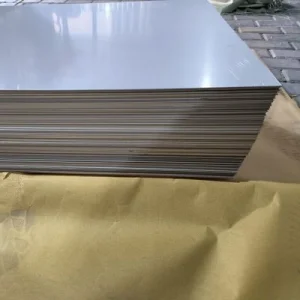
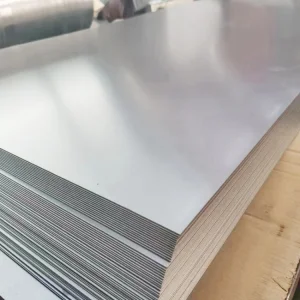
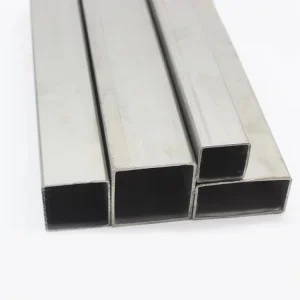
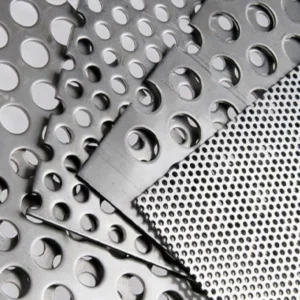
Explore our complete inventory of cold-rolled plates, decorative pipes, industrial welded tubing, and custom perforated metals available for global export.