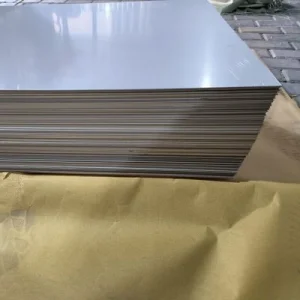
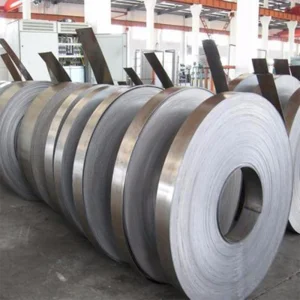
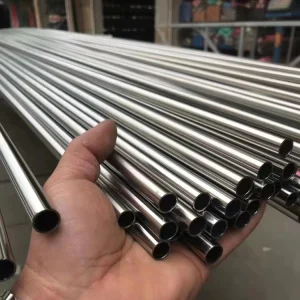
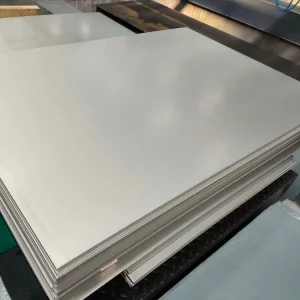
Primary CE-Certified Stainless Steel & Mesh Products
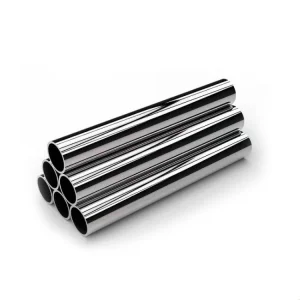
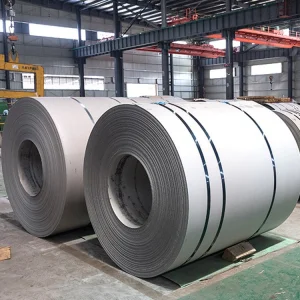
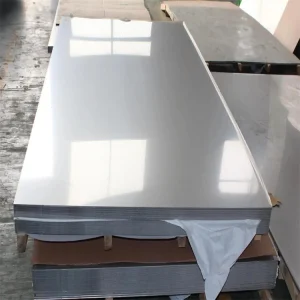
Direct mill supply of high-grade stainless steel coils, pipes, sheets, and processed expanded mesh feedstock manufactured to rigid ISO and European compliance benchmarks.
Macro Industry Dynamics: The Evolution of Flat Expanded Metal Mesh
Unracturing the structural mechanics, material efficiency gains, and global B2B procurement trends driving modern architecture, chemical processing, and civil engineering projects.
Definition & Metallurgical Transformation
Flat Expanded Metal (also designated as Flattened Expanded Mesh or deburred planar mesh) originates as solid metal sheet or coil—ranging from austenitic stainless steels (SUS304, SUS316L) to structural carbon steels and aluminum alloys. The material is simultaneously slit and stretched in a continuous cold-forming shear process, creating open diamond or hexagonal apertures.
Unlike standard (raised) expanded metal where strand bonds sit at an inclined angle, flat expanded metal passes through a dedicated secondary cold-rolling mill. This intense flattening operation flattens the bonds and strands down into a uniform horizontal plane, reducing overall thickness, smoothing edge burrs, and yielding a completely smooth, flush surface.
Global B2B Market Current Reality
The global industrial mesh sector is undergoing a massive shift towards material optimization and structural decarbonization. Procurement directors across Europe, North America, and the Middle East are replacing traditional woven wire mesh and perforated metal sheets with flat expanded metal due to its zero-waste production methodology.
Because the slitting and stretching process creates no metal scrap loss (unlike perforated metal, which loses 30%–50% of material as punched slugs), expanded metal delivers up to 40% cost efficiency per square meter while maintaining superior tensile-to-weight ratios.
Strategic E-E-A-T Sourcing Value
Partnering with tier-1 Chinese manufacturers backed by authentic CE Certification (EN 1090-1 / CPR) ensures full supply chain transparency. Sourcing raw materials directly from elite steel mills like Tsingshan, TISCO, POSCO, and Baosteel guarantees verified heat numbers, chemical composition stability, and traceable mechanical properties from coil feedstock to final flattened mesh dispatch.
The Regulatory Imperative: Demystifying CE Certification for Flat Expanded Metal
Why CE Marking under EN 1090-1, EN 10088-2, and the Construction Products Regulation (CPR 305/2011) is essential for risk-free international procurement.
EN 1090-1 Execution of Steel Structures
For architectural facades, structural walkways, and safety balustrades installed within the European Economic Area (EEA), flat expanded metal panels must strictly comply with EN 1090-1 (Factory Production Control - FPC). This mandate dictates certified welding performance, declared load-bearing capacities, and stringent fatigue limit testing under Execution Classes EXC1 through EXC3.
EN 10088-2 & ASTM A240 Material Integrity
CE marked flat expanded mesh relies entirely on certified alloy feedstock. Whether utilizing SUS304/304L for general atmospheric exposure, SUS316L for marine chloride environments, or Duplex 2205 for high-stress industrial applications, every lot must provide an authentic EN 10204 3.1 Inspection Certificate detailing exact chemical ladle analysis and mechanical yield/tensile strength tests.
Engineering Matrix: Standard Raised Mesh vs. Flat (Flattened) Expanded Metal
| Engineering Parameter | Standard (Raised) Expanded Metal | CE Certified Flat Expanded Metal | Procurement Advantage |
|---|---|---|---|
| Surface Topography | Strands set at angled inclination (3D texture) | 100% Flush, planar, deburred surface | Prevents snagging, safe for pedestrian traffic & conveyor belts |
| Overall Thickness | 2x to 3x of original sheet thickness | Equivalent to original sheet gauge (±5%) | Fits tightly into narrow architectural frames and filter slots |
| Shear Stress Distribution | Concentrated strain points at strand junction bonds | Work-hardened, cold-rolled re-aligned strain field | Superior point-load resistance and structural fatigue life |
| Acoustic & Airflow Drift | Deflects directional airflow at varied angles | Laminar planar airflow with predictable pressure drop | Ideal for HVAC louvers, acoustic attenuation, battery grids |
| Handling Safety & Coating | Sharp burred edges require aggressive de-burring | Smooth rolled edges; uniform powder coat/galvanizing adhesion | Extended coating lifespan (5000+ hrs salt spray compliance) |
Precision Cold-Rolling Manufacturing & Processing Roadmap
How our advanced Wuxi processing facility transforms master coils into certified flat expanded metal panels with sub-millimeter tolerances.
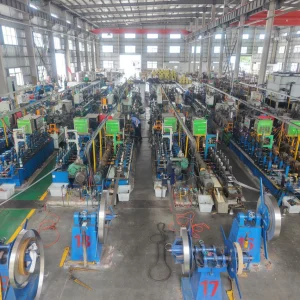
Prime coil feedstock sourced from Tsingshan or TISCO (SUS304/304L/316L/Duplex 2205) is mounted on continuous automated slitting lines. Slit strips are brought to exact width specifications with edge camber held within strict limits.
Precision die knives slit and expand the metal simultaneously. Computer-controlled feed rates govern LWD (Long Way of Diamond) and SWD (Short Way of Diamond) parameters, forming pristine uniform mesh apertures.
The raised mesh enters heavy-duty 4-high cold-rolling mills. Extreme hydraulic pressure flattens the raised bonds into the exact original sheet plane. Downstream roller levelers eliminate internal stresses, guaranteeing flatness without bow or wave deformation.
Laser guided edge trimming removes side scrap, leaving solid border margins or clean open mesh edges as required by engineering drawings (ANSI/NAAMM MBG 553 / DIN 791).
Panels undergo pickling and passivation, electro-polishing (for 316L), architectural powder coating, or hot-dip galvanizing. Spectral alloy verification (PMI), dimensional audits, and tensile testing validate final CE marking approval.
Localized Industry Application Scenarios
Tailored structural and functional solutions deployed across demanding global industrial ecosystems.
1. European Green Architecture & Solar Shading
In Germany, France, and Scandinavia, CE certified SUS304 and aluminum flat expanded mesh panels serve as high-performance facade cladding and dynamic solar shading. The planar smooth finish allows precise integration into concealed architectural curtain wall frames while offering optimized shading factors, reducing HVAC cooling energy consumption by up to 32%.
2. Heavy Industrial Walkways & Plant Safety Grid
Across North American chemical plants and mining facilities, flat expanded steel flooring provides slip-resistant, non-snag walkway surfaces. Capable of supporting heavy foot traffic and equipment carts without wheel resistance, these planar grids facilitate liquid/debris drainage while preventing object fall-through compliance with OSHA standards.
3. Middle East Offshore Oil & Gas Platforms
Deployed in extreme marine environments (Persian Gulf, North Sea), super duplex 2205 and 316L flat expanded mesh act as heavy-duty flame arrestors, coastal intake screen filters, and offshore deck cladding. Resistance to pitting corrosion (PREN ≥ 35) ensures zero maintenance over 25-year operational lifespans.
4. EV Battery & Green Hydrogen Substrates
In cutting-edge energy storage facilities, micro-flattened nickel and stainless steel expanded mesh act as current collectors, battery electrode grids, and green hydrogen electrolyzer anodes. The planar structure maximizes surface contact area and conductivity while maintaining uniform pore distribution for gas-liquid diffusion.
Export Logistics, Localized Support & Quality Assurance
How we eliminate cross-border risks, streamline customs clearance, and guarantee physical product protection during sea freight transit.
Seaworthy Export Packaging Protocols
Flat expanded metal panels are bundled on reinforced steel skid pallets with corner edge protectors. Each stack is wrapped in volatile corrosion inhibitor (VCI anti-rust film), heat-sealed in thick polyethylene sheeting, and strapped with heavy-duty steel bands. Fumigated wooden or steel crates are customized for breakbulk or containerized shipping (20GP / 40HC).
Customs & Duty Compliance Optimization
Our experienced export documentation department issues fully compliant HS/TARIC codes (e.g., HS 7314.14 / HS 7314.41 for stainless expanded metal), Certificate of Origin (Form E, Form F, FTA documentation), and complete Mill Test Reports (EN 10204 3.1) to streamline customs clearance and minimize import tariff friction in Europe, America, and Southeast Asia.
Localized Technical & Engineering Consultations
We partner with overseas engineering firms, offering pre-bid drawing reviews, CAD/BIM model generation, sample panel dispatch via express air freight, and on-site welding/installation technical guidelines tailored to regional building codes (Eurocodes, IBC, BS Standards).
Technology Roadmap & Industry Outlook (2025–2030)
Leading the next decade of intelligent metal mesh manufacturing through AI-driven quality monitoring, green metallurgy, and micro-expanded ultra-thin alloys.
AI-Powered Real-Time Defect Detection
Integrating high-speed optical camera arrays and machine-learning vision models directly onto cold-rolling flattening lines. System automatically detects strand micro-cracks, strand necking, or surface planarity deviations down to 0.02mm in real-time, eliminating human error.
Ultra-Thin Micro-Flattened Foils
Developing ultra-precision micro-expanding machinery capable of expanding foil gauges down to 0.05mm thickness. Designed specifically for next-generation solid-state lithium batteries, hydrogen fuel cell gas diffusion layers, and aerospace acoustic damping panels.
Zero-Carbon Metal Manufacturing Metrics
Transitioning primary heating and power systems to green solar and hydrogen energy sources in line with EU CBAM (Carbon Border Adjustment Mechanism) mandates. Aiming for a 45% carbon footprint reduction per ton of expanded mesh by 2028.
Frequently Asked Questions (Technical & B2B Sourcing)
In-depth technical answers addressing engineer specifications, compliance validation, custom fabrication, and order execution.
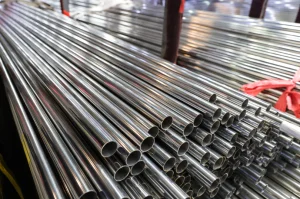
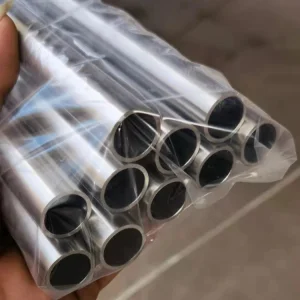
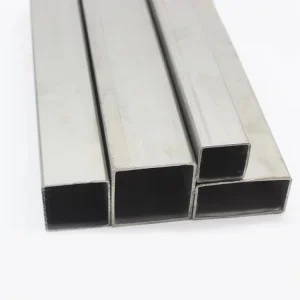
Industrial Grade Stainless Steel Plates, Coils & Tubing
Complete your supply chain requirement with fully traceable, mill-certified industrial materials direct from our state-of-the-art manufacturing hub.