
Featured Certified Stainless Steel Products
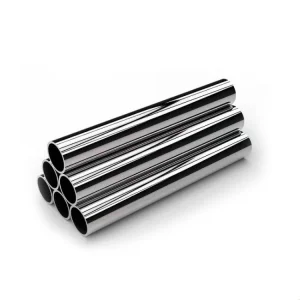
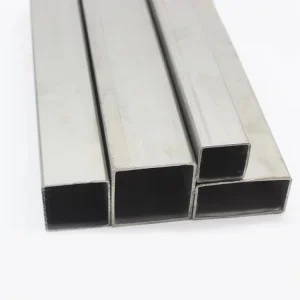
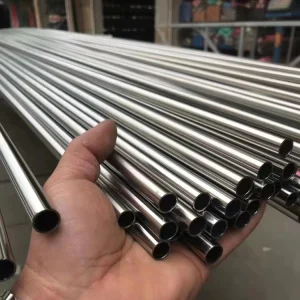
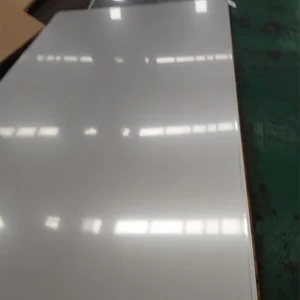
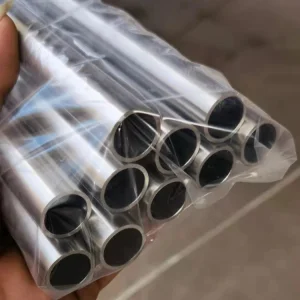
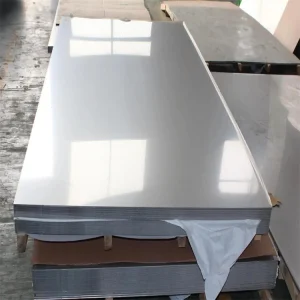
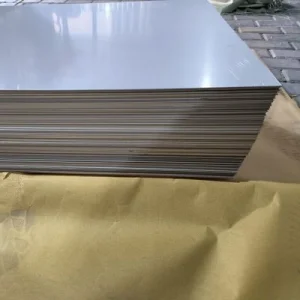
Explore our mill-direct inventory of CE certified stainless steel plates, pipes, and customized structural profiles engineered for high-corrosion industrial environments.
1. Technical Metallurgy: UNS S31603 / EN 1.4404 Alloy Microstructure & Performance
In high-consequence industrial engineering, selecting material based merely on nominal "316" naming conventions introduces structural vulnerability. Grade 316L (UNS S31603 / EN 1.4404) represents an extra-low carbon variant of the molybdenum-bearing austenitic stainless steel family, formulated specifically to eliminate carbide precipitation during welding and ensure long-term structural integrity in chloride-dense processing environments.
Chemical Composition Engineering
The alloy's enhanced pitting and crevice corrosion resistance stems from the precise addition of 2.0%–3.0% Molybdenum (Mo) combined with 16.0%–18.0% Chromium (Cr) and 10.0%–14.0% Nickel (Ni). Controlling Carbon (C) content strictly below 0.03% prevents the formation of chromium carbides ($Cr_{23}C_6$) at grain boundaries during thermal exposure in the 425°C–860°C range, preserving intergranular corrosion resistance.
PREN Value & Passive Layer Stability
The Pitting Resistance Equivalent Number (PREN) measures localized pitting performance. Calculated via $PREN = \%Cr + 3.3(\%Mo) + 16(\%N)$, certified 316L plate yields a PREN rating of 23.0 to 25.0, outperforming standard 304 plate ($PREN \approx 19.0$). Upon oxygen exposure, 316L rapidly forms a self-healing chromium/molybdenum oxide oxide film ($Cr_2O_3 / MoO_3$) only a few nanometers thick, shielding the substrate from aggressive halides.
Phase Stability & Mechanical Toughness
With a fully austenitic fcc (face-centered cubic) crystalline structure, 316L retains exceptional impact toughness from elevated processing temperatures down to cryogenic regimes (-196°C). Unlike martensitic or ferritic grades, 316L exhibits zero ductile-to-brittle transition temperature (DBTT), making it indispensable for liquified gas storage, marine bulkheads, and cryogenic process piping.
| Alloy Grade | UNS / EN Standard | Carbon (C) Max | Molybdenum (Mo) | Nickel (Ni) | Typical PREN | Primary Industrial Utility |
|---|---|---|---|---|---|---|
| 304 / 304L | S30403 / 1.4307 | 0.030% | — | 8.0% - 10.5% | 18.0 - 20.0 | General architectural, food equipment, domestic water systems |
| 316L (Standard) | S31603 / 1.4404 | 0.030% | 2.0% - 2.5% | 10.0% - 13.0% | 23.0 - 25.0 | Chemical tanks, offshore structures, marine hardware, pharma piping |
| 316L (High-Mo) | S31603 / 1.4435 | 0.030% | 2.5% - 3.0% | 12.5% - 15.0% | 25.5 - 27.0 | High-purity bioprocess vessels, urea synthesis, aggressive marine service |
| 2205 Duplex | S32205 / 1.4462 | 0.030% | 3.0% - 3.5% | 4.5% - 6.5% | 34.0 - 36.0 | Oil & Gas flowlines, desalination plants, high-stress pressure vessels |
2. CE Certification & Global Quality Assurance Frameworks
CE marking on 316L stainless steel plate serves as a mandatory legal declaration that the material complies with European Union health, safety, and environmental protection standards. For EPC contractors and engineering procurement teams, verifying CE certification extends beyond checking a stamp—it requires validating the underlying Factory Production Control (FPC) system and material test traceability.
EN 10088-2 & CPR 305/2011 Compliance
For architectural and load-bearing civil engineering applications, CE compliance requires adherence to EN 10088-2 under the Construction Products Regulation (CPR 305/2011). Manufacturers must issue a Declaration of Performance (DoP) attesting to tensile strength, elongation, yield strength, and impact resistance at specified temperatures.
PED 2014/68/EU Pressure Directives
When 316L plate is designated for pressure equipment, boilers, or heat exchangers, compliance with the Pressure Equipment Directive (PED 2014/68/EU) Annex I, Section 4.3 is mandatory. Materials must be verified by a notified body through certified quality systems, guaranteeing material safety against sudden brittle fracture under high operating pressures.
EN 10204 3.1 / 3.2 Material Traceability
Every shipment from certified factories is accompanied by an Inspection Certificate according to EN 10204 3.1 (issued by the manufacturer's independent QC department) or EN 10204 3.2 (validated by an independent third-party inspection agency like Lloyd's Register, TÜV, or SGS). Certifications detail heat heat number chemical breakdown, mechanical testing, and ultrasonic defect inspection (UT).
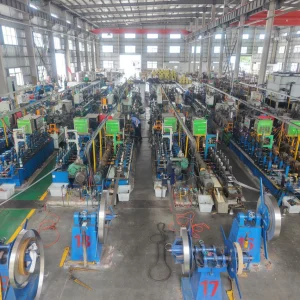
Data Visualization: Smart Manufacturing Scale
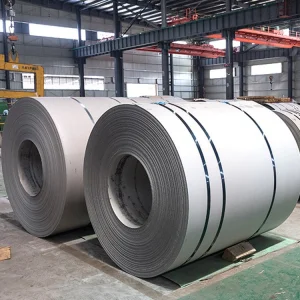
Combining automated hot-rolling and cold-reducing lines in Wuxi and Foshan industrial centers to supply verified premium stainless steel plates worldwide.
3. Global Industrial Dynamics & Procurement Demand Shifts
The global market for 316L stainless steel plate is experiencing a structural pivot driven by decarbonization mandates, green hydrogen infrastructure expansion, and stringent ESG compliance across heavy process industries.
Green Hydrogen & Carbon Capture (CCUS)
Hydrogen electrolyzers operating in high-moisture, acidic environments demand ultra-clean 316L plates for bipolar separator plates and storage vessels. High-pressure carbon dioxide transmission systems also leverage 316L's immunity to wet $CO_2$ carbonic acid pitting.
LNG Liquefaction & Marine Scrubbers
IMO 2020 low-sulfur regulations continue to drive marine exhaust gas cleaning scrubber manufacturing. 316L provides a cost-effective, high-durability barrier against acidic condensate ($H_2SO_4$) in marine scrubber towers compared to nickel alloys.
Semiconductor & Ultra-Pure Utilities
The global semiconductor fab buildout requires electropolished (EP) 316L stainless steel plate for vacuum chamber walls, chemical distribution skids, and ultra-pure water (UPW) storage systems where surface roughness ($Ra$) must stay below 0.25 µm.
4. China Industry 4.0: Supply Chain Resilience & Cost Efficiency
China's stainless steel manufacturing landscape has evolved from high-volume output to technological leadership in advanced metallurgy, automated cold-reduction, and digital supply chain integration. Leading factories in Wuxi and Jiangsu clusters offer unprecedented value for international enterprise procurement.
Vertical Raw Material Integration
Direct mill partnerships with primary nickel pig iron (NPI) smelters and major stainless steel slab producers (Tsingshan, TISCO, Baosteel) allow Chinese factories to eliminate multi-tier intermediary markups, maintaining pricing stability even during global commodity swings.
Sendzimir 20-High Rolling Precision
Modern Chinese cold-rolling complexes utilize 20-high Sendzimir mills equipped with automatic gauge control (AGC) and laser flatness measurement systems. This guarantees strict thickness tolerances within ±0.02 mm across full 1500mm / 2000mm width plates.
End-to-End Processing & Logistics
From decoiling and plasma/fiber laser precision cutting to surface finishing (No.4, Hairline, 8K Mirror, Embossed) and export-grade wooden crate packaging, factory-direct operations eliminate lead-time friction, shipping directly from Shanghai or Ningbo ports.
5. Application Scenarios & Engineering Field Performance
Desalination & Coastal Infrastructure
In coastal environments where atmospheric chloride levels exceed 500 mg/m²/day, 316L plate is specified for splash-zone structural supports, intake screens, and reverse osmosis (RO) membrane pressure housing frames to prevent stress corrosion cracking (SCC).
Organic Acid Reactors & Storage Tanks
316L exhibits outstanding resistance to organic acids (acetic, formic, tartaric) at elevated temperatures. Storage tanks for raw chemical feedstocks rely on 316L cold-rolled plate with 2B finish to ensure easy sanitization and contamination-free handling.
Sanitary Process Vessels & CIP Systems
Clean-In-Place (CIP) and Steam-In-Place (SIP) bio-reactors demand 316L plates with mechanical polishing and secondary electropolishing down to $Ra < 0.38\,\mu\text{m}$. This smooth profile eliminates microscopic crevices where bacterial biofilms could attach.
6. Frequently Asked Questions (FAQ) for Technical Procurement
Expert technical responses to common engineering, quality verification, and international sourcing questions regarding 316L stainless steel plate.
How do I verify the authenticity of a CE certification for 316L stainless steel plate?
Validating CE certification requires requesting the official Declaration of Performance (DoP) and checking the Notified Body's registration number against the NANDO (New Approach Notified and Designated Organisations) database. Ensure that the Material Test Certificate (EN 10204 3.1 or 3.2) explicitly cross-references the specific heat number stamped on the edge or face of each plate.
What is the difference between EN 10204 3.1 and 3.2 material test certificates?
An EN 10204 3.1 certificate is issued and validated by the manufacturer's own quality control department, which must be independent of the production unit. An EN 10204 3.2 certificate requires independent third-party verification (such as TÜV, SGS, or Bureau Veritas), where an inspector witnesses sampling, mechanical testing, and verifies traceability directly at the mill.
Why choose 316L over 304 for marine and coastal structural applications?
Grade 304 lacks molybdenum, making it susceptible to localized pitting and crevice corrosion when exposed to chloride ions present in seawater and ocean spray. Grade 316L contains 2.0%–3.0% Molybdenum, raising its Pitting Resistance Equivalent Number (PREN) from ~19.0 to >23.0, protecting structural assets against long-term breakdown.
Can 316L stainless steel plate be welded without subsequent solution heat treatment?
Yes. Thanks to its ultra-low carbon content (C ≤ 0.03%), 316L resists sensitization—the precipitation of chromium carbides at grain boundaries—during welding. This eliminates the risk of intergranular corrosion in the heat-affected zone (HAZ), making post-weld solution annealing unnecessary for most structural fabrications.
What dimensional tolerances govern cold-rolled and hot-rolled 316L plate production?
Cold-rolled plates are typically produced according to ASTM A480 / EN 10088-2, featuring tight thickness tolerances (often within ±0.02 mm to ±0.05 mm). Hot-rolled plates follow ASTM A480 / EN 10029 (Class B or Class C thickness tolerances), optimized for structural strength and heavy load bearing.
What surface finishes are available for factory-direct 316L stainless steel plate?
Available surface finishes include No.1 (hot-rolled, annealed, and pickled for structural use), 2B (cold-rolled, smooth mill finish), BA (Bright Annealed, mirror-like reflection), No.4 / Hairline (brushed finish for decorative/architectural panels), and 8K Mirror (ultra-reflective electropolished finish for cleanroom and decorative projects).
How does China Industry 4.0 manufacturing ensure zero surface defects on mirror plates?
Advanced Chinese mills implement automated optical surface inspection systems (AOI) combined with protective laser PE/PVC films applied during bright annealing and slitting. This prevents scratching, pitting, or particulate contamination throughout fabrication, packing, and international container transport.
Related Certified Stainless Steel Coils, Plates & Pipes
Discover additional certified stainless steel materials available directly from our manufacturing facilities with comprehensive MTC documentation.
Request Certified Mill Test Reports & Customized Pricing
Connecting EPC buyers, project engineers, and global stockists directly with top-tier Chinese stainless steel production facilities. Request material certifications, custom cutting quotations, and export shipping schedules today.