
China’s stainless steel sheet market is broad, but a polished catalog does not prove consistent production. For buyers planning 2026 sourcing, this guide compares ten manufacturers through practical factors: product range, stated grades, thickness options, surface finishes, processing capacity, export experience, and quality documentation. Details matter. A brushed sample, a mill test certificate, and a clear tolerance sheet can reveal more than a bold sales claim.
Materials engineer Michael F. McGuire, author of Stainless Steels for Design Engineers, emphasizes a useful principle: select an alloy for its service environment and fabrication requirements, not its name alone. This is a paraphrase of his engineering guidance, not a verbatim quotation. In practice, a kitchen panel, a chemical-processing vessel, and an architectural façade may require different grades and finishes. There is no universal best sheet. That sounds obvious, yet buyers still overlook it.
The manufacturers below are presented as candidates for comparison, not as a guarantee of fit or performance. Check current specifications directly, request recent test records, and confirm whether quoted dimensions and finishes match your drawings. Ask about edge condition, packaging, lead time, and response to rejected material. Small details can become expensive later. Rankings also have limits: company capabilities and market conditions change, and public information may not tell the whole story. Use this list as a starting point for careful supplier evaluation, then verify every critical claim before placing an order.
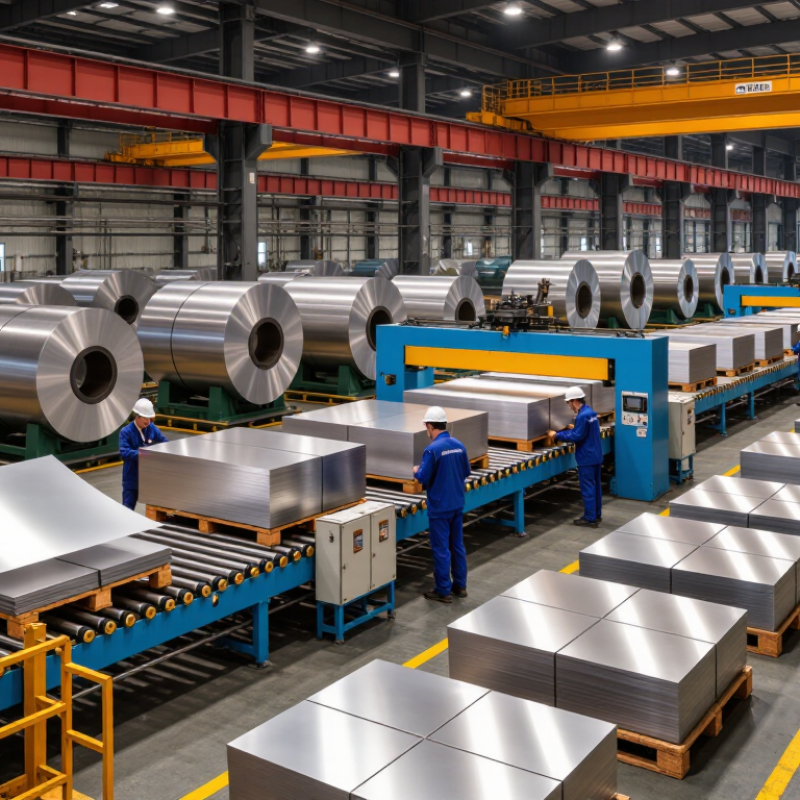
China’s stainless steel sheet industry links large-scale melting with tightly controlled rolling and finishing. The China Special Steel Enterprises Association reported about 39.44 million tonnes of Chinese stainless crude-steel output in 2024. That figure describes crude steel, not finished sheet. It should not be treated as a direct measure of sheet capacity.
Production typically moves from electric-arc-furnace melting and refining to continuous casting, hot rolling, and cold rolling. Annealing and pickling remove scale and restore corrosion resistance. The surface is then finished to the buyer’s requirements. Small process differences show up clearly: a brushed sheet can reveal uneven grain, while a thin polished sheet may show handling marks under bright light. Details matter.
For buyers, useful checks include grade certificates, thickness tolerance, surface-finish samples, and batch traceability. Ask how the supplier controls flatness and protects sheets during packing. A production line may look impressive, but that alone says little about consistency between batches. The awkward part is that specifications can still leave room for interpretation. Confirm acceptance criteria before ordering, and inspect the actual finish—not just a photograph.
A reliable comparison starts with the details of the sheet itself. Confirm available grades, thickness ranges, width tolerances, and surface finishes. Ask how flatness and edge quality are checked, not just whether the factory can meet a specification. Details matter.
Request recent inspection records and material certificates for comparable orders. Check that heat or batch numbers connect the documents to the supplied sheets. A neat certificate is useful, but it cannot replace consistent testing and clear traceability. Ask for evidence.
Production capacity should match your order pattern, including repeat purchases and custom dimensions. Discuss minimum quantities, sample lead times, packaging, and how the factory handles schedule changes. If possible, inspect sample sheets under ordinary workshop lighting; fine scratches can be easy to miss in polished product photos. No checklist catches everything.
Communication is also a practical quality signal. Can the technical team explain tolerances plainly and flag limitations before confirming an order? Compare written quotations carefully, since similar terms may hide differences in finish, packing, or inspection scope. Ask about corrective steps when a batch falls short, and record agreed acceptance criteria before production. A factory visit or independent inspection can add confidence, though neither guarantees every shipment will be perfect. Some uncertainty remains.
A 2026 shortlist of China’s stainless steel sheet manufacturers should compare production capability, material traceability, and delivery consistency—not just quoted price. The strongest candidates can explain which grades they roll or process, such as 304 and 316L, and provide clear thickness and tolerance ranges. Ask whether sheets are made from their own coils or processed from purchased material. That distinction affects lead time and quality control.
Check the details. Request recent inspection records, material certificates, and samples with the specified finish, such as 2B, BA, or No. 4. A caliper can reveal thickness variation; a close look under angled light can expose scratches or uneven polishing. Confirm packaging too, especially edge protection and moisture barriers for long-distance shipping. Ten suppliers may look similar on paper.
Factory audits and trial orders help test what sales documents cannot. Compare response speed, packing quality, and how clearly staff handle a specification change. One awkward truth: a polished sample may not represent every production batch. Keep that possibility in mind, and agree on inspection criteria before placing a large order.
China’s sheet manufacturers offer a broad grade range, but grade selection should follow the service environment, not price alone. Type 304 suits many indoor and general-purpose applications; 316L is often specified where chlorides increase corrosion risk. Type 430 can fit less demanding environments, while duplex 2205 offers higher strength for suitable designs. Check the exact composition and applicable specification. ASTM A240, EN 10088-2, and GB/T 3280 cover different product and market requirements; they are not interchangeable by name alone.
Production scale is substantial. The International Stainless Steel Forum’s Stainless Steel in Figures 2024 reports 58.4 million tonnes of global stainless crude steel production in 2023. The World Stainless Association later reported 62. iw million tonnes for 2024, underscoring the scale of supply, not the quality of any individual sheet. Ask suppliers to confirm the standard, grade, thickness tolerance, flatness, and surface finish in writing. Common finishes include 2B, BA, and brushed surfaces. Specify whether edges should be slit or deburred, and provide cut sizes and packaging needs. Small details matter.
Request a material test certificate and verify its heat number against the shipment. A sample sheet can reveal scratches, waviness, and finish variation before bulk ordering. One practical weakness: buyers sometimes compare grades but overlook finish and tolerance, which can disrupt fabrication. Even careful specifications need checking. Verify the delivered material.
Specified chromium content by grade — a material comparison, not a manufacturer ranking.
Bars show the midpoint of each grade’s commonly specified chromium range, expressed as a percentage by mass. Values are representative of chemistry limits in ASTM A240/A240M; applicable requirements can vary by standard, product form, and edition. Sheet customization options such as thickness, width, finish, and cut length are specified separately.
Selecting a stainless steel sheet manufacturer for a 2026 project starts with the application, not a ranked list. Define the grade, thickness, width, surface finish, flatness, and tolerances before comparing quotations. For visible panels, scratches and finish consistency matter. For fabricated parts, thickness variation and edge quality may matter more. Request a technical data sheet and a batch-specific mill test certificate. Compare both with your specification. A polished sample looks convincing, but it cannot prove every delivered sheet will match.
Ask how the manufacturer checks thickness and surface quality, and whether inspection records can accompany the shipment. Confirm production capacity, minimum order quantities, lead times, and packaging details. Moisture-resistant wrapping and protected edges can help prevent damage in transit. It is easy to overlook packaging until sheets arrive with scuffed corners. Request a sample cut from the intended production batch when possible. If answers about tolerances or inspection methods remain vague, pause before placing a large order. A lower quote is not always lower project cost.
Tips: Send a clear specification with your inquiry. Ask for a sample, inspection records, and a written delivery schedule. Check how claims or replacement requests are handled. Keep one small uncertainty in view: your fabrication process may need tighter tolerances than the initial drawing suggests.
Anonymous manufacturer-selection benchmark. The table compares verifiable product and quality requirements rather than naming or ranking individual companies.
| No. | Selection Criterion | Practical Benchmark | What to Verify with the Manufacturer |
|---|---|---|---|
| 1 | Grade and applicable standard | Common sheet grades include 304/304L, 316L, and ferritic 430. ASTM A240/A240M covers chromium and chromium-nickel stainless steel plate, sheet, and strip for pressure vessels and general applications. | Request the grade designation and the standard stated on the quotation and inspection documents. Confirm that the selected grade suits the project environment and fabrication requirements. |
| 2 | European grade equivalence | Common EN 10088-2 designations include 1.4301 for 304, 1.4307 for 304L, 1.4404 for 316L, and 1.4016 for 430. | If both ASTM and EN designations are requested, have the supplier confirm the exact specification and chemistry. Treat grade equivalents as specification-dependent, not as automatic one-to-one substitutions. |
| 3 | Thickness and dimensional tolerances | There is no single universal tolerance for every stainless sheet order. ASTM A480/A480M and EN ISO 9445 provide dimensional and form tolerances for applicable stainless flat products. | Specify nominal thickness, width, length, edge condition, and the governing tolerance standard and class. Request measured results for the ordered dimensions. |
| 4 | Surface finish | Common finish designations include 2B, BA, No. 1, and No. 4. Finish names describe different processing routes and appearances; they are not interchangeable. | State the required finish and side(s), and approve a physical sample where appearance matters. Confirm any protective film, surface inspection method, and allowable cosmetic defects. |
| 5 | Chemical composition and traceability | A material test certificate should identify the supplied grade and report the relevant heat analysis. EN 10204 Type 3.1 is a commonly specified inspection document for metallic products. | Ask for a certificate linked to the delivered coil or sheet by heat number and batch. Check that the reported chemistry and product identification match the purchase specification. |
| 6 | Mechanical test information | Mechanical requirements depend on the grade, product form, thickness, and cited specification; tensile properties are commonly reported on material inspection certificates. | Confirm which mechanical properties and test methods apply to the ordered product. Request test results traceable to the relevant heat or batch rather than relying only on a generic datasheet. |
| 7 | Manufacturing and processing scope | Supply routes can include mill-produced flat product and downstream processing such as slitting, cut-to-length, polishing, or film application. Processing capability varies by facility. | Clarify which steps are performed at the manufacturing site and which are subcontracted. Confirm finished dimensions, edge quality, packaging, and inspection responsibility for each step. |
| 8 | Corrosion-service suitability | Corrosion performance depends on the alloy, surface condition, temperature, chemicals, and operating environment. A grade designation alone does not guarantee suitability for every service condition. | Provide the project’s exposure conditions and obtain a grade recommendation supported by the relevant technical data. For critical applications, validate the material choice with the project engineer or corrosion specialist. |
| 9 | Order, packing, and delivery controls | Sheet orders are commonly specified by grade, standard, finish, thickness, width, length, quantity, and packaging requirements. Delivery lead time and minimum order quantity are supplier- and order-specific. | Obtain written confirmation of quantity basis, production or stock status, delivery schedule, packaging method, and handling requirements. Do not assume that indicative lead times are guaranteed. |
| 10 | Quality system and final inspection | A quality-management certificate, when offered, should identify the certified legal entity, site, scope, and validity period. Certification does not replace product-specific inspection records. | Verify certificates with the issuing certification body where practical. Agree on sampling, inspection records, nonconformance handling, and any independent inspection before production or shipment. |
Use this benchmark to compare quotations on an equivalent specification. Confirm current standards, tolerances, certificates, and supply details directly with each prospective manufacturer before placing an order.
Compare production capability, material traceability, and delivery consistency—not only price. A low quote can hide extra costs.
Specify grade, thickness, width, finish, flatness, and tolerances. A clear sheet prevents avoidable misunderstandings.
Request the specified finish, such as 2B, BA, or No. 4. Check thickness with a caliper and inspect the surface under angled light. Looks can mislead.
Ask for a technical data sheet, recent inspection records, and a batch-specific material certificate. Compare each document with your written specification.
No. A sample may not represent every production batch. Request a sample from the intended batch when possible, though this still leaves some uncertainty.
Confirm capacity, minimum order quantities, lead times, and whether sheets come from the manufacturer’s own coils or purchased material. The source can affect quality control.
Ask for moisture-resistant wrapping and protected edges. Scuffed corners are frustrating—and easy to overlook until delivery.
Consider a factory audit or trial order. Check response speed, packing quality, and how staff handle specification changes. One small order may reveal more than polished sales materials.
This article explores how Stainless Steel Sheet manufacturing in China combines raw material selection, precision rolling, heat treatment, and finishing processes to meet diverse industrial needs. It outlines practical criteria for evaluating manufacturers in 2026, including production capacity, quality control, technical expertise, customization capabilities, communication, and delivery reliability. A comparative overview of ten manufacturers is intended to help readers understand the range of suppliers available without focusing on brand promotion.
The article also explains common product grades, applicable material standards, surface finishes, dimensions, and options for customized processing. It concludes with a project-focused selection guide, encouraging buyers to define technical requirements, verify product documentation, compare quotations on equivalent terms, and assess a supplier’s ability to provide consistent quality and dependable support. These considerations can help businesses choose a suitable manufacturing partner for their application, budget, and schedule.