
Choosing a reliable Stainless Steel Plate manufacturer starts with more than comparing price lists. Buyers must weigh alloy grades, thickness tolerances, surface finish, and the consistency of mill test documentation. A plate intended for a pressure vessel faces different demands than one used in food-processing equipment. Small differences matter. A rough edge, uneven finish, or delayed certificate can disrupt fabrication schedules and inspection work. This guide introduces ten manufacturers with international reach and established roles in stainless steel production. Names alone do not prove suitability, though.
The comparison considers product range, production capability, quality systems, service networks, and access to technical data. Where available, buyers should confirm grade availability, dimensions, lead times, and documentation directly with each supplier. These details can change by region, order size, and current production conditions. Independent certifications and traceable test reports offer useful evidence, but they do not replace application-specific engineering review. That distinction is easy to overlook. A manufacturer with broad capacity may not be the best fit for a small, urgent order. Likewise, a nearby service center may offer faster delivery than a distant primary mill. The list is a starting point, not a purchasing verdict. Market information changes, and public product descriptions can leave practical questions unanswered. Use these profiles to narrow options, then request current specifications and confirm details before final selection.
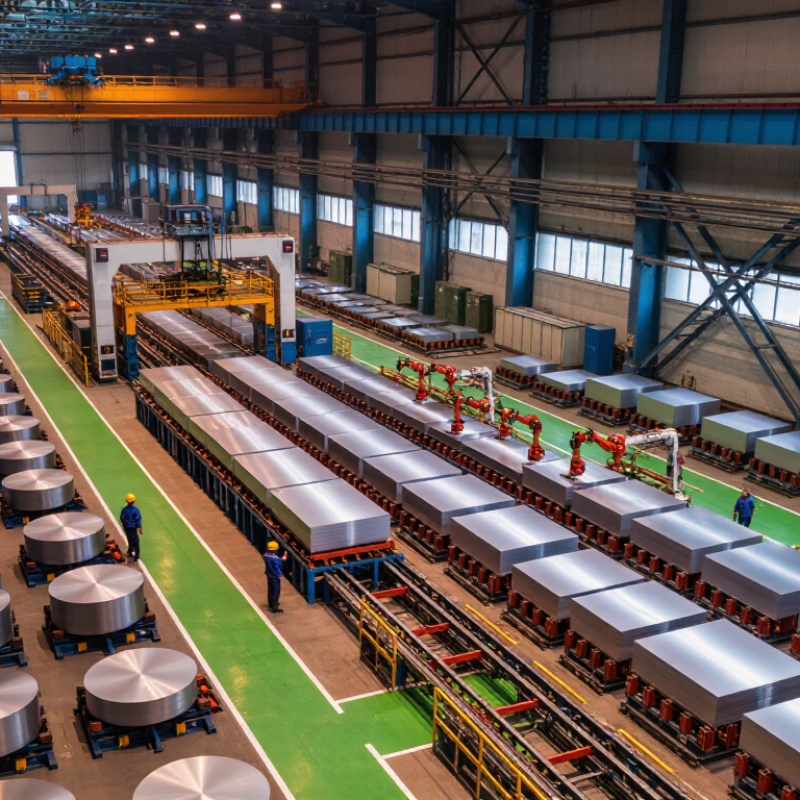
Stainless steel plates are flat, thick products used where strength, heat resistance, or corrosion resistance matters. Their defining feature is chromium, which forms a thin protective oxide layer on the surface. Many grades also contain nickel or other alloying elements, but the exact mix depends on the intended service. “Plate” does not have one universal thickness boundary; standards and industry practices differ.
Production begins by melting selected metals, often alongside recycled stainless steel. Refining adjusts the chemistry before the molten steel is cast into a slab. The slab is reheated and passed through heavy rollers to reduce its thickness. It is then heat-treated and usually pickled, which removes surface scale. Some products receive further cold rolling for tighter dimensions or a smoother finish. The process is not perfectly linear; a grade’s composition and required properties can change the route. Small details matter. A slight surface mark may be harmless in one application but unacceptable in another. Manufacturers therefore check dimensions, surface condition, and material chemistry before plates are cut or shipped. Even so, inspection cannot replace choosing a grade suited to the actual environment.
A credible comparison begins with the plate itself, not a sales claim. Check available stainless steel grades, thicknesses, widths, and surface finishes. Ask whether stated tolerances match the requirements on your drawings. Small differences matter. A plate that arrives slightly warped can create extra cutting work and delay fabrication. Request sample inspection records and confirm how measurements are taken. Clear methods make supplier claims easier to assess.
Production capability matters, but published capacity alone tells little. Compare typical order sizes, lead times, and the manufacturer’s ability to maintain consistent quality across repeat orders. Ask for material test certificates, heat numbers, and traceability details. These records help connect delivered plates to their production batches. Verify that the documents match the actual shipment, not just a sample file. Technical support matters, too. Can staff explain grade selection or discuss forming and welding constraints?
Delivery reliability deserves the same attention as laboratory data. Review packaging methods, storage protections, and procedures for handling surface-sensitive plates. A scratched sheet may still meet its chemical specification, yet it can be unsuitable for a visible installation. Request references or relevant quality-system documentation, then check details directly where possible. No single score captures every risk. Supplier comparisons also depend on project needs, and my own weighting may overlook an important factor. Keep criteria consistent, but leave room for informed judgment.
A global comparison of stainless steel plate manufacturers should look beyond output volume. A fair assessment checks grade availability, thickness range, surface quality, mill certificates, and delivery consistency. Rankings can shift by region and product needs.
An integrated producer manages melting, casting, and rolling, giving buyers clearer process control. A high-volume mill focuses on widely used grades and repeat orders. A precision specialist holds close thickness tolerances and offers varied finishes. A service-oriented supplier keeps common plate sizes in stock and cuts them to order. A coastal exporter builds its operation around port access and shipping schedules. An alloy-focused producer supplies grades suited to demanding heat or corrosion conditions. A heavy-plate maker handles thicker material for industrial equipment. A surface-focused mill pays close attention to flatness and visible finish. A regional producer may offer shorter lead times for nearby customers. A digitally equipped manufacturer can connect production records with each batch. Details matter.
These profiles describe capabilities, not a verified ranking of named companies. Buyers should compare sample inspection results and documentation, not rely on catalogue claims alone. Even a strong mill can have limits; confirm dimensions, finish, and availability for the exact order.
Stainless steel plate manufacturers differ in more than mill size. Their product range may include hot-rolled plate, cold-rolled sheet, and cut-to-length stock. Common grades include 304 and 304L for general fabrication, 316L for improved corrosion resistance, and duplex 2205 for demanding strength requirements. Availability depends on each producer’s equipment and order volume. Details matter. Surface finishes such as No. 1, 2B, and brushed affect appearance and downstream preparation. Buyers should confirm finish definitions rather than rely on shorthand.
Production capability is best judged through measurable specifications: thickness and width ranges, dimensional tolerances, flatness, and maximum plate weight. Ask whether the facility can level, shear, or plasma-cut material to the required dimensions. Reliable suppliers should also provide material test certificates and traceable heat numbers, with inspection procedures suited to the order. A polished brochure can hide limitations, so request representative inspection records or sample documentation. Capacity varies. Even a capable mill may not hold every grade in every thickness, and lead times can shift with production schedules. It is worth checking those gaps before committing to a design.
A stainless steel plate suitable for a food-processing line may fail in a marine structure. Evaluate manufacturers against the real operating conditions, not a general product list. Share the required grade, thickness, dimensions, surface finish, and exposure to chemicals or saltwater. Ask how they control thickness tolerances and verify material composition. Details matter.
For pressure vessels or hot equipment, check whether the supplier can provide traceable test records and consistent batch documentation. For formed parts, discuss bend radii, flatness, and edge condition; a small burr can complicate fabrication. Ask for sample plates or inspection data from comparable orders. Ask for evidence. A polished sample alone proves little about a full production run. Review packaging methods too: damp wrapping or rough handling can leave stains and scratches before the plate reaches your workshop.
Compare production capacity, lead times, and communication during specification changes. A low quote may omit cutting, testing, or protective film. Confirm what is included in writing. Certifications can support confidence, but they do not replace checking the exact plate and its records. I would still treat supplier claims cautiously; paperwork can look complete while practical details remain unclear.
It is a flat, thick steel product used when strength, heat resistance, or corrosion resistance matters. Chromium creates a thin protective oxide layer.
Selected metals are melted, refined, and cast into a slab. The slab is reheated, rolled, heat-treated, and usually pickled to remove surface scale.
Chromium forms a protective layer on the surface. The right grade still depends on the actual environment.
Grades 304 and 304L suit general fabrication. Grade 316L offers improved corrosion resistance, while duplex 2205 serves demanding strength requirements.
Yes. No. 1, 2B, and brushed finishes affect appearance and later preparation. Confirm what each finish means before ordering.
Check thickness, width, tolerances, flatness, and maximum plate weight. Ask whether the facility can level, shear, or plasma-cut the material.
Request material test certificates, traceable heat numbers, and inspection records suited to the order. A polished brochure is not enough.
No. Equipment, order volume, and production schedules limit availability. Capacity varies. Confirm gaps and lead times before finalizing a design.
This article explains what Stainless Steel Plate is, how it is produced, and why factors such as material composition, rolling methods, heat treatment, and quality control influence its performance. It introduces practical criteria for comparing manufacturers worldwide, including production capacity, grade availability, dimensional accuracy, consistency, technical support, and delivery reliability. Together, these considerations offer a clear framework for understanding how leading producers differ without relying on brand names.
The article also reviews common product forms, grades, and manufacturing capabilities, then considers how to match a supplier to a particular application. Buyers can weigh operating conditions, required strength and corrosion resistance, plate dimensions, applicable quality requirements, and project volume before making a decision. By assessing both product suitability and a manufacturer’s ability to meet specifications consistently, readers can make more informed choices for their industrial needs.
